Late 19th century
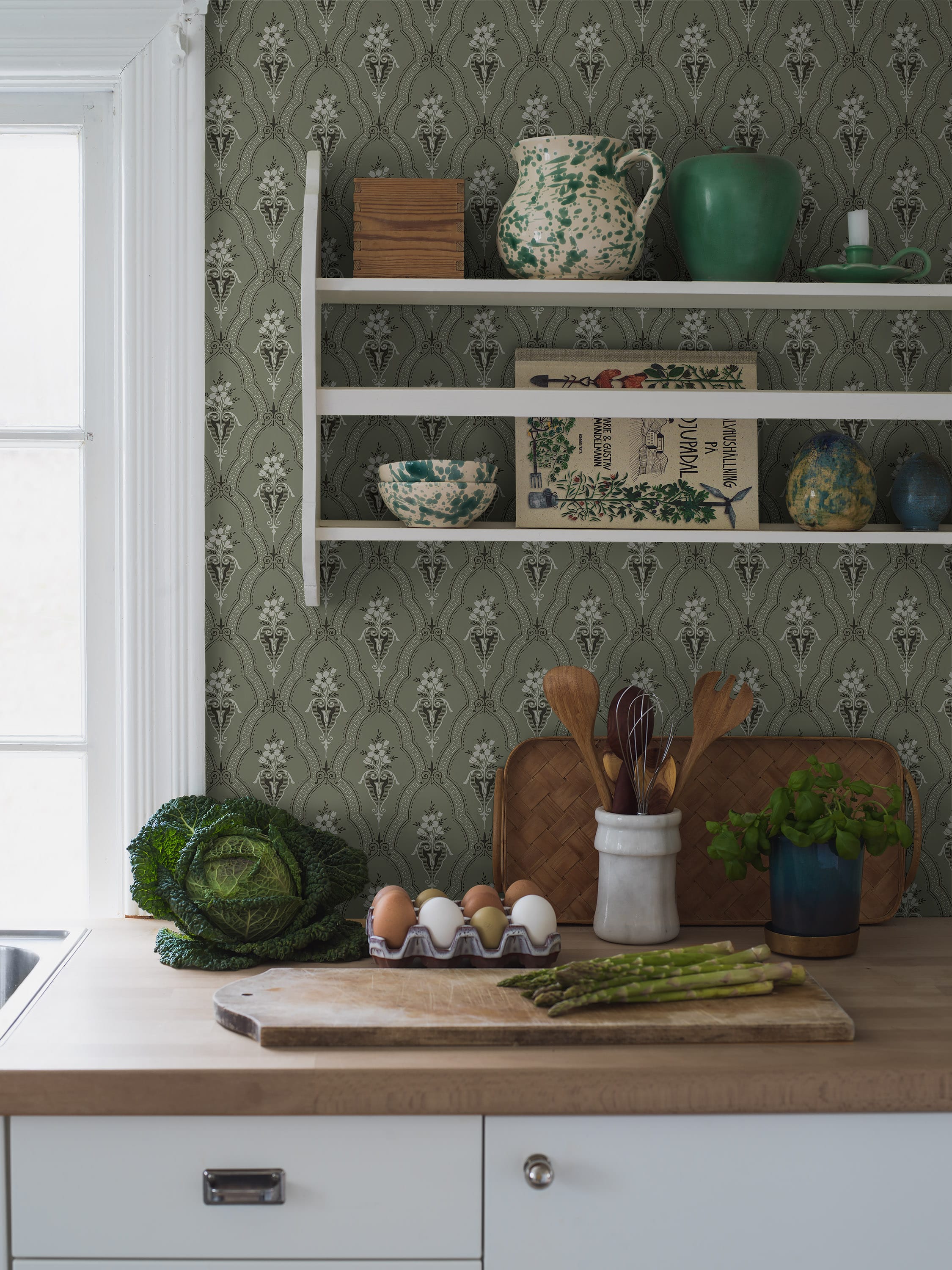
During the late 1800s, wallpaper was found in almost every home. At this period around the turn of the century, it was also common to re-wallpaper relatively often. The paper was still of rather low quality and the wallpapers faded, yellowed and broke in a completely different way than in dag.
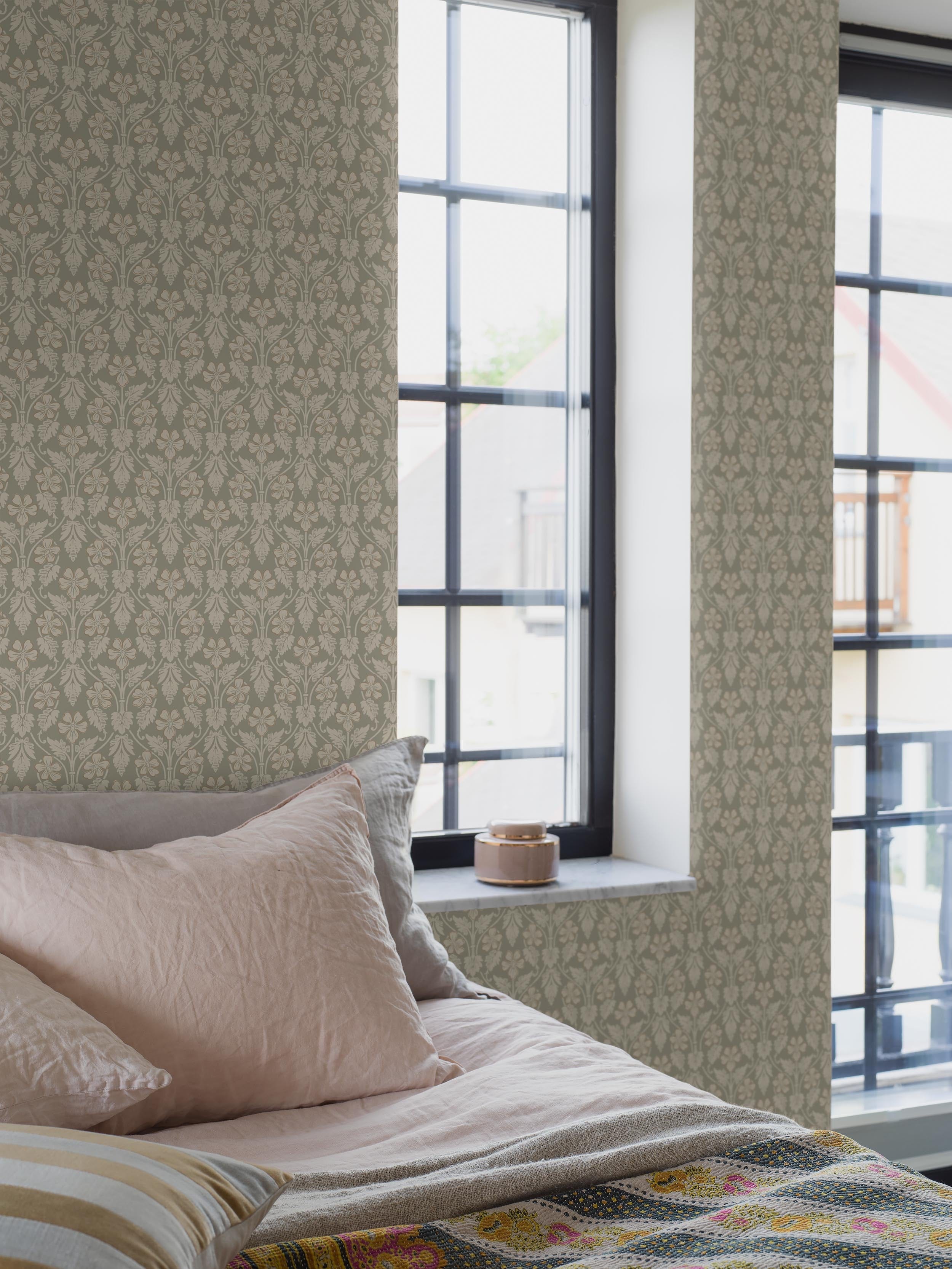
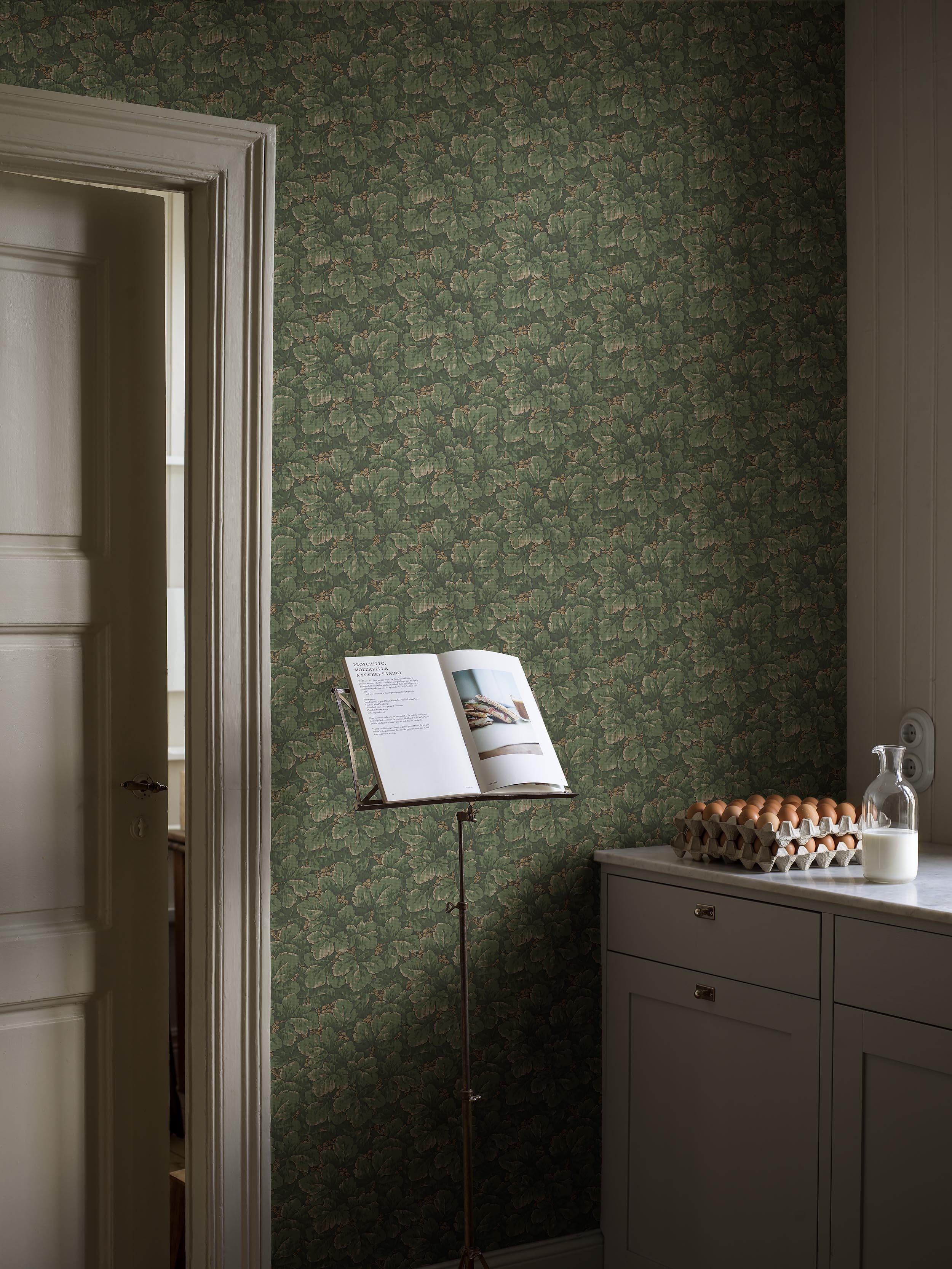
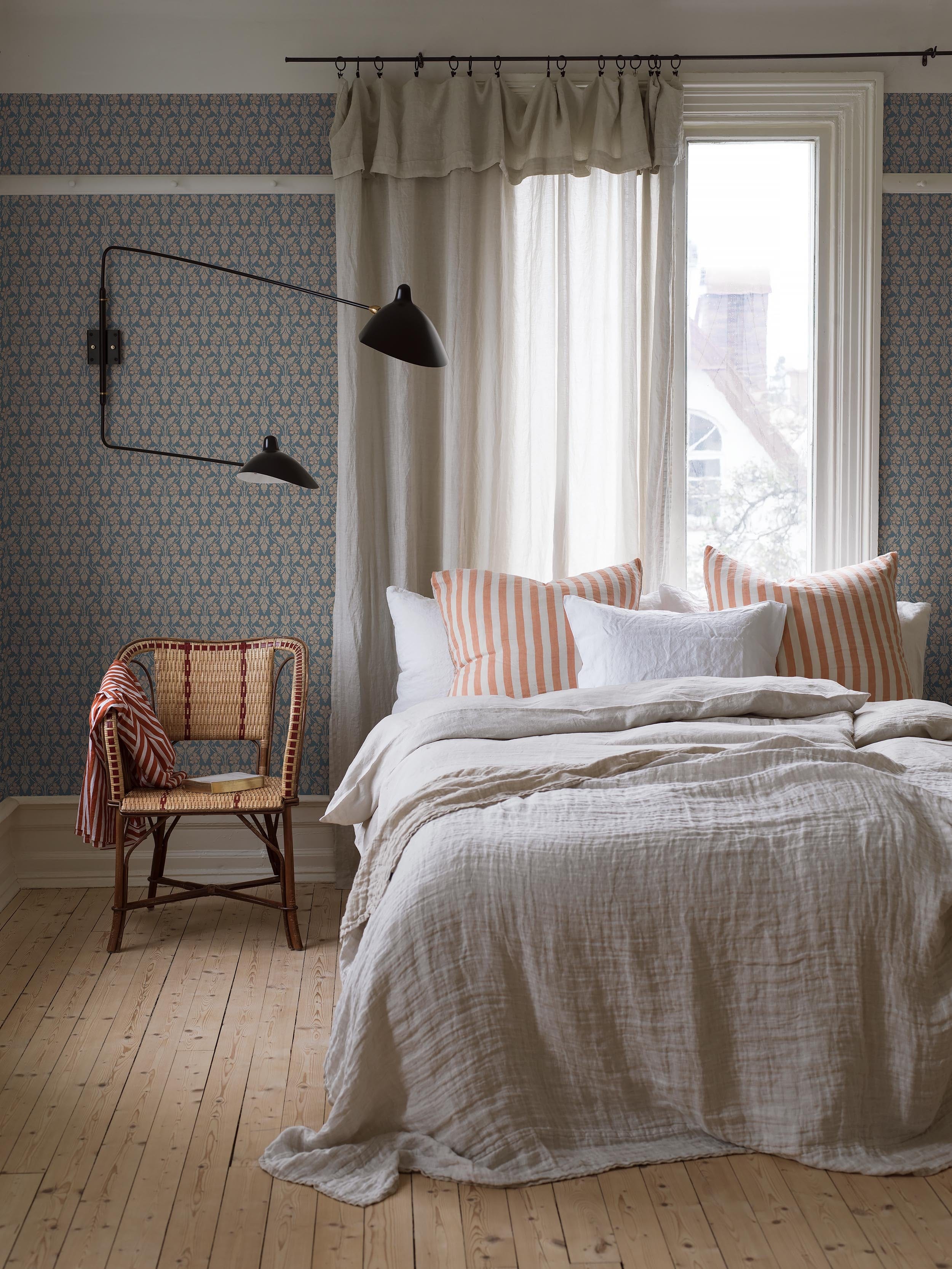
Towards the end of the 19th century, it became popular to choose wallpaper according to the room they were to sit in. Dining room wallpaper, for example, was often dark, with a dark green, dark red or black background to match the dining room furniture, which was often made of oak. Wallpaper that imitated exclusive materials such as marble or golden leather was also common in that type of room. Smoking rooms and libraries were often decorated with darker wallpaper with oriental designs; intimate and sophisticated! In finer salons, on the other hand, the walls were covered in light, airy wallpaper and in the bedroom it was usual to have flowers.
Jugend & Art Nouveau of the turn of the century
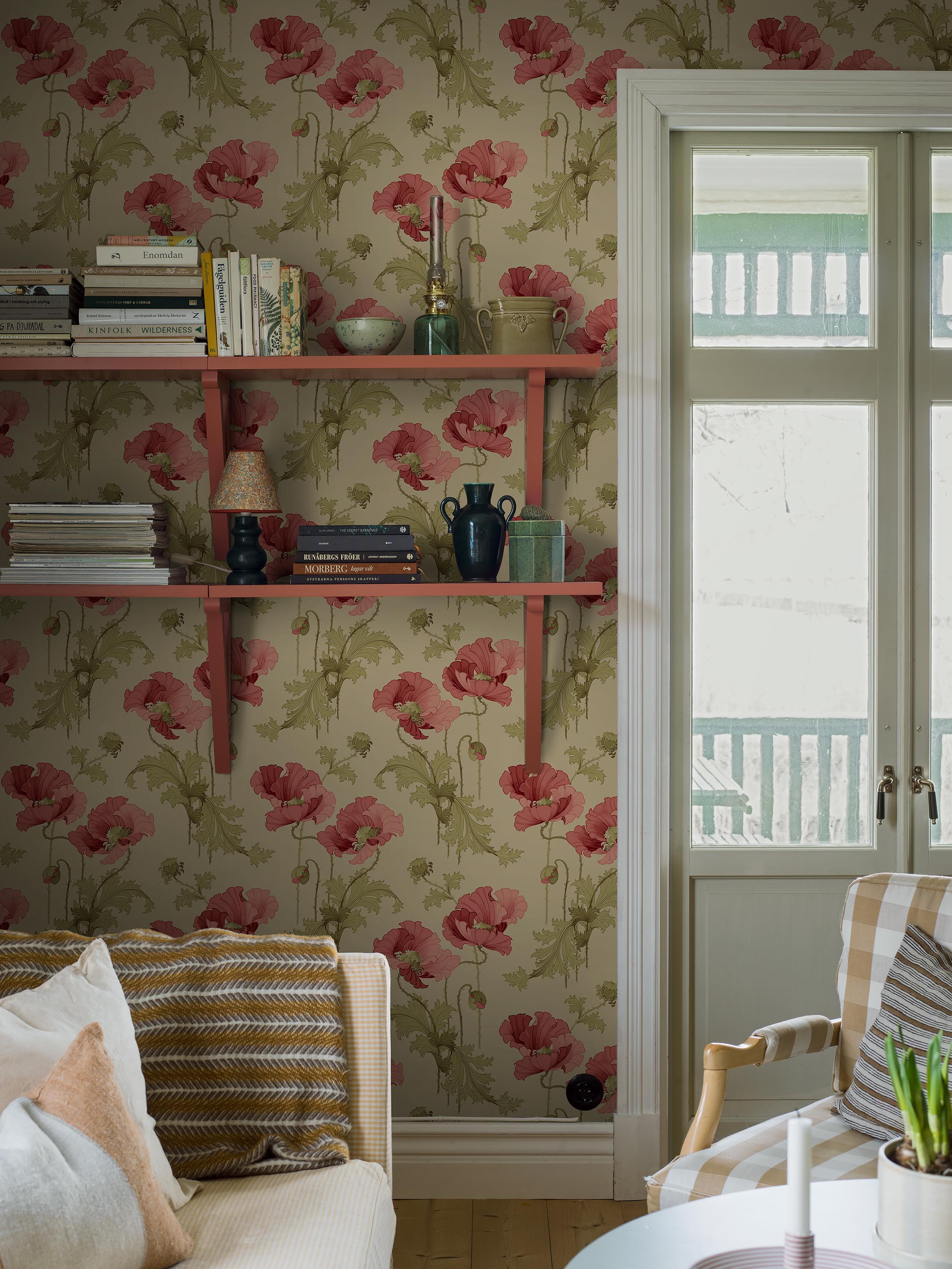
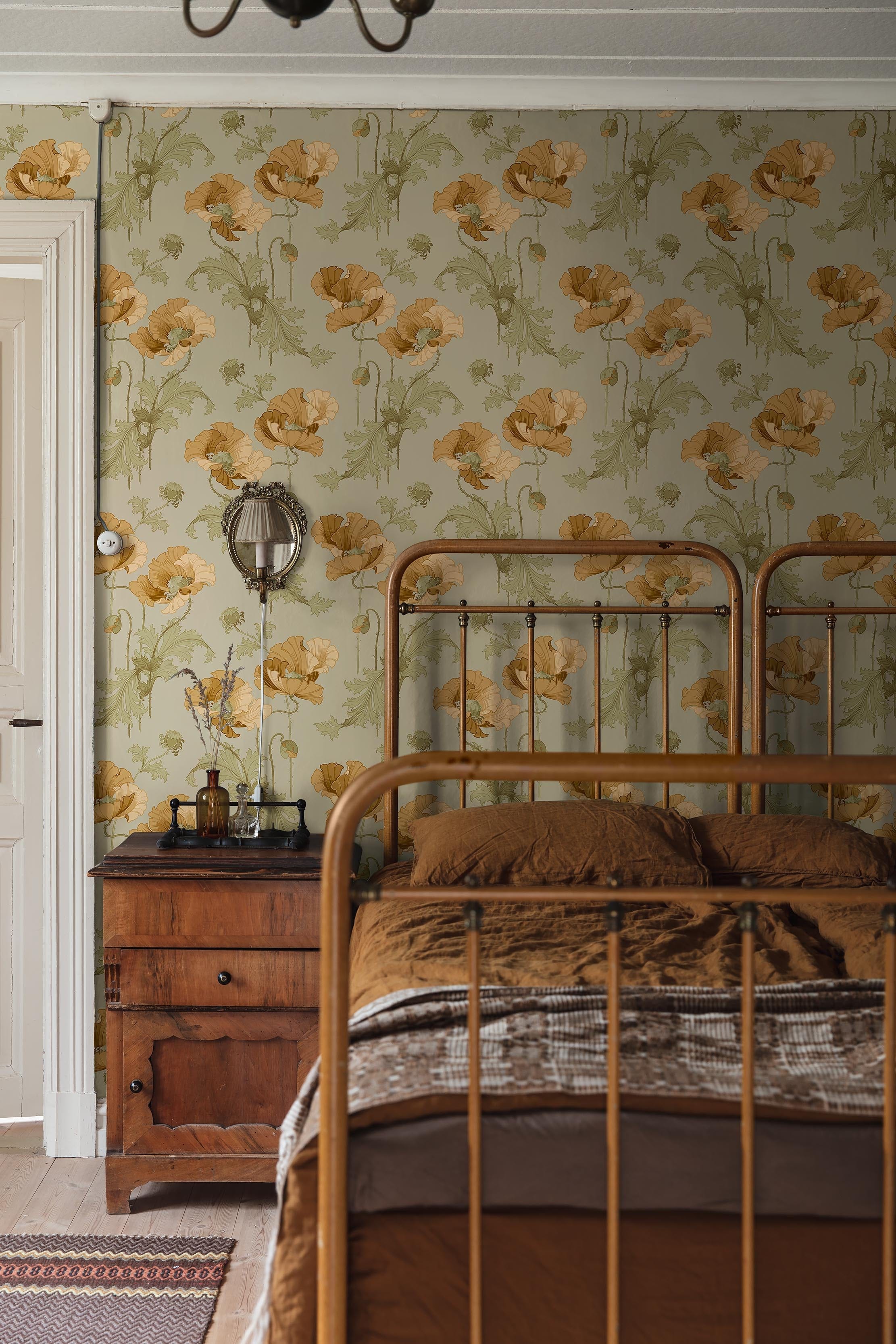
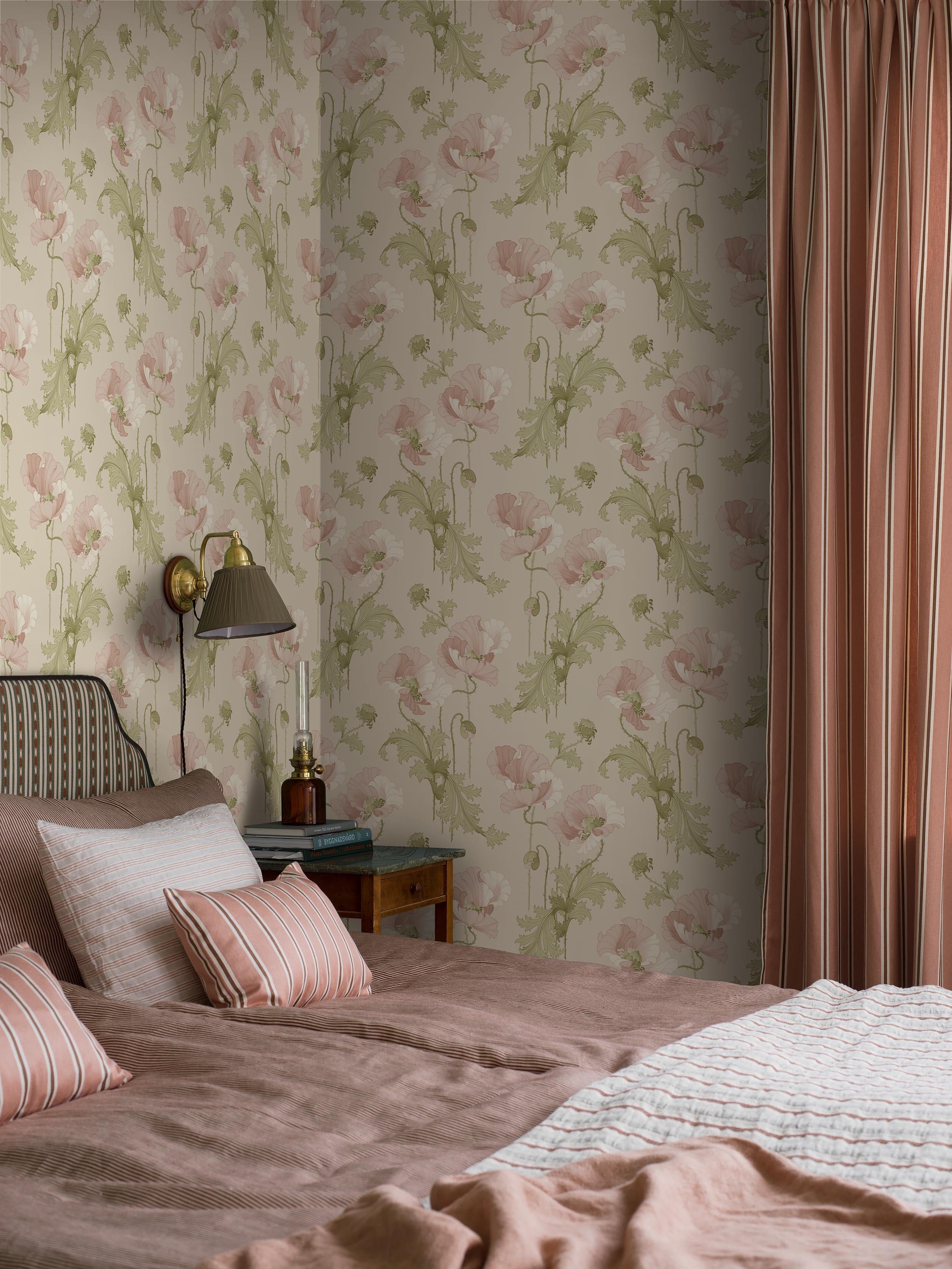
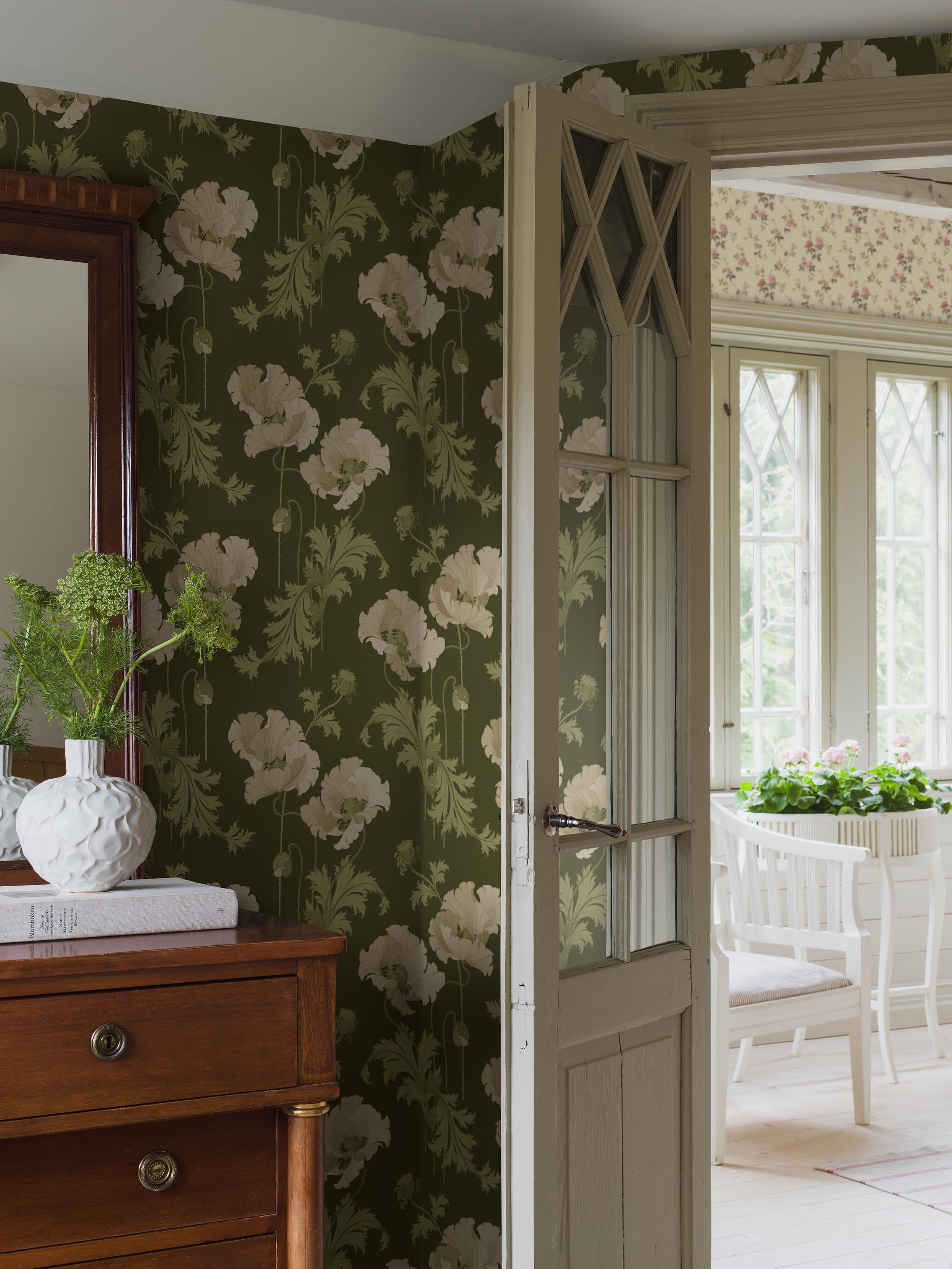
Many times the colors and patterns of the wallpapers have signaled cultural as well as political ideals, and that is exactly what happened around the turn of the century when the Jugend and Art Nouveau style eras flourished (Jugend and Art Nouveau are two different names for the same style). Turn-of-the-century wallpapers from this era are characterized by undulating organic shapes and nature-inspired motifs such as flowers, bladverk and insects—a sensuous, artistic backlash to the heavier, more standardized form and function of industrialism.
Arts & Crafts wallpaper
Around the turn of the century in 1900, the English version also came Arts and Crafts- the movement to Sweden. Surely you've seen pioneer William Morris' botanical designs? The pompous plant ornaments of the 19th century were replaced by delicate, winding plant forms in symmetrical patterns, often with inspiration from our Nordic flora. Lilja, iris, vallmo, näckros and peony adorned many turn-of-the-century wallpapers in Swedish homes.
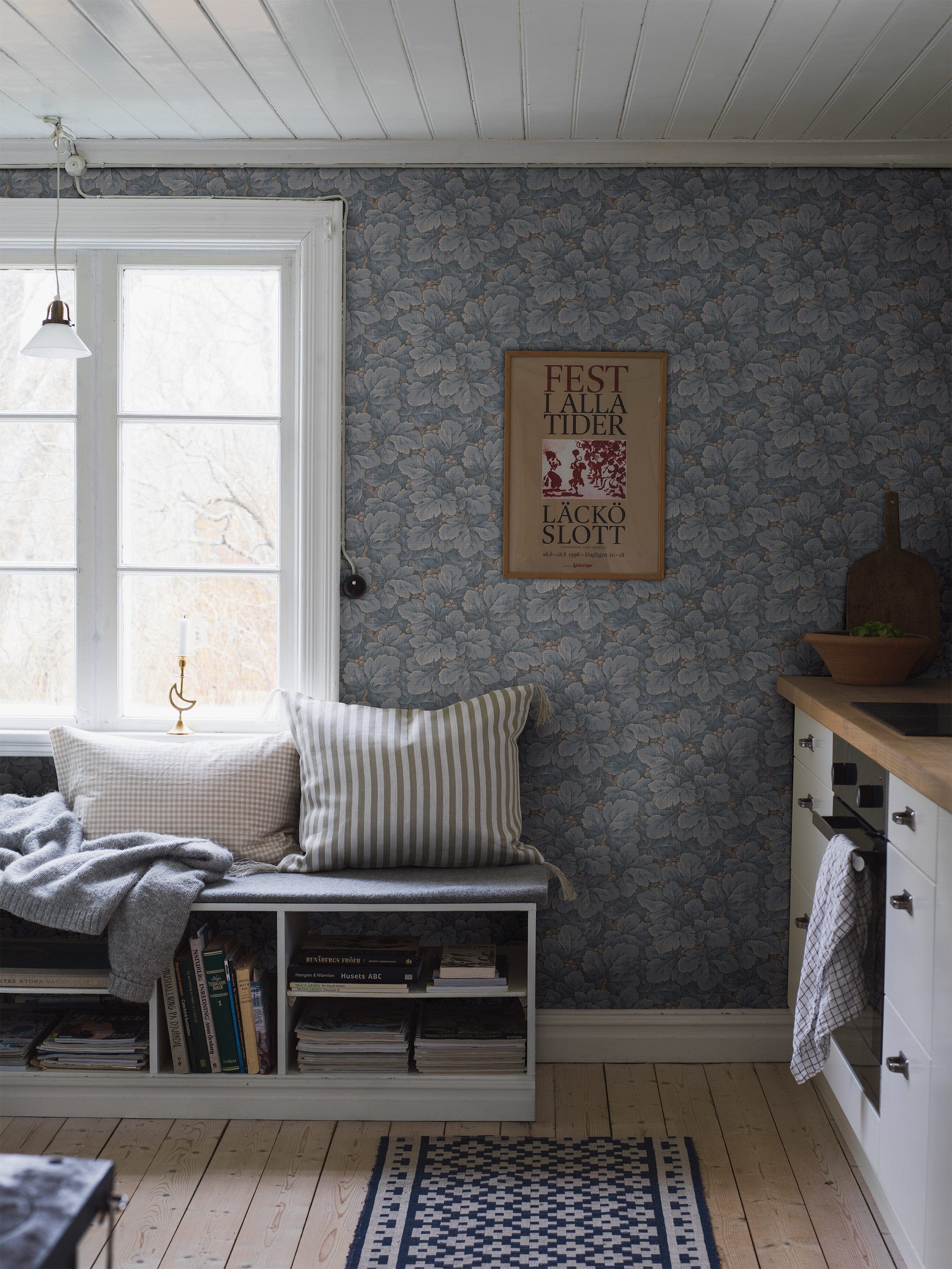
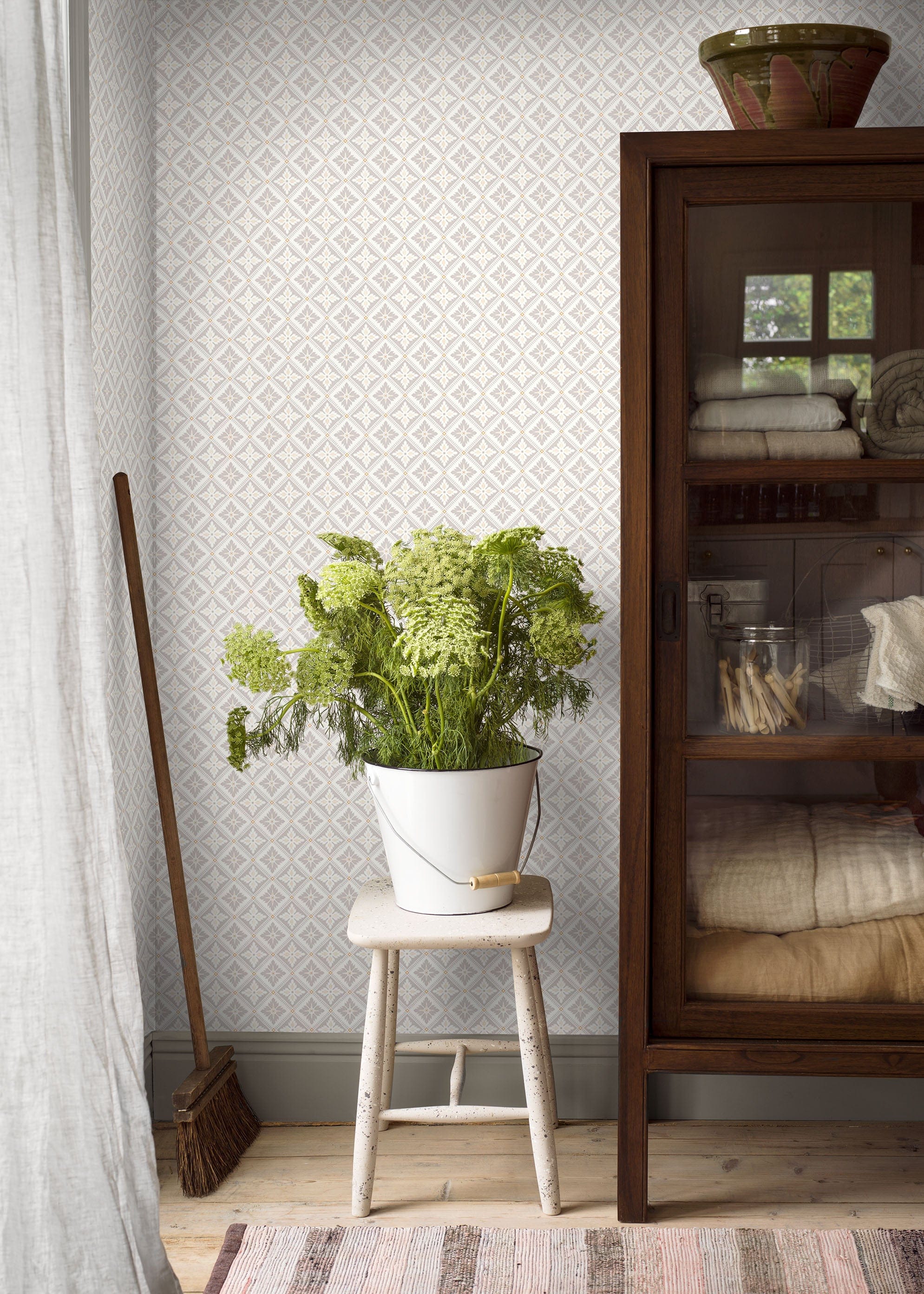
Around 1910, tapestry wallpaper with darker patterns and woven structure also trended. Small-patterned wallpapers with, for example, small flower bouquets also became popular, especially in bedrooms.