The history of wallpaper
The earliest European wallpapers were exclusive, hand-painted wallpapers, often imported from Asia. Silk and leather also appeared on the walls of wealthy homes. In Sweden, wallpaper makers began hand-printing wallpaper during the 16th and 17th centuries. Glue paint, woodcuts and simpler stencils were often used to create patterns. The paper itself was expensive and the wallpaper consisted of smaller sheets that were glued together to form longer sheets. A time-consuming and expensive process – at that time wallpaper was still something of a luxury.
During the second half of the 18th century, wallpaper became increasingly popular in Sweden, and decorating with wallpaper became more common even among wealthy citizens. Many of the wallpapers from this time were produced by small wallpaper makers in Sweden, but a lot was also imported from France, England and Germany.
Below we tell you more about the styles that appeared on wallpaper during the 16th, 17th and 18th centuries. An exciting journey from the Renaissance to Gustavian neoclassicism and Swedish peasant style.
Renaissance wallpaper from the 16th century
The Renaissance was characterized by a return to the ideals of antiquity. A style marker from this period is the golden ratio, and proportions in perfect harmony. The wealthy homes were decorated with gilded coffered ceilings, large murals and woven tapestries. Naturally, very few wallpapers from this period have survived, but if you want to look for wallpaper in antique style, you can look for the acanthus (the foliage), the grotesque (the twisted figure) and the moresque (the stylized plant ornament).
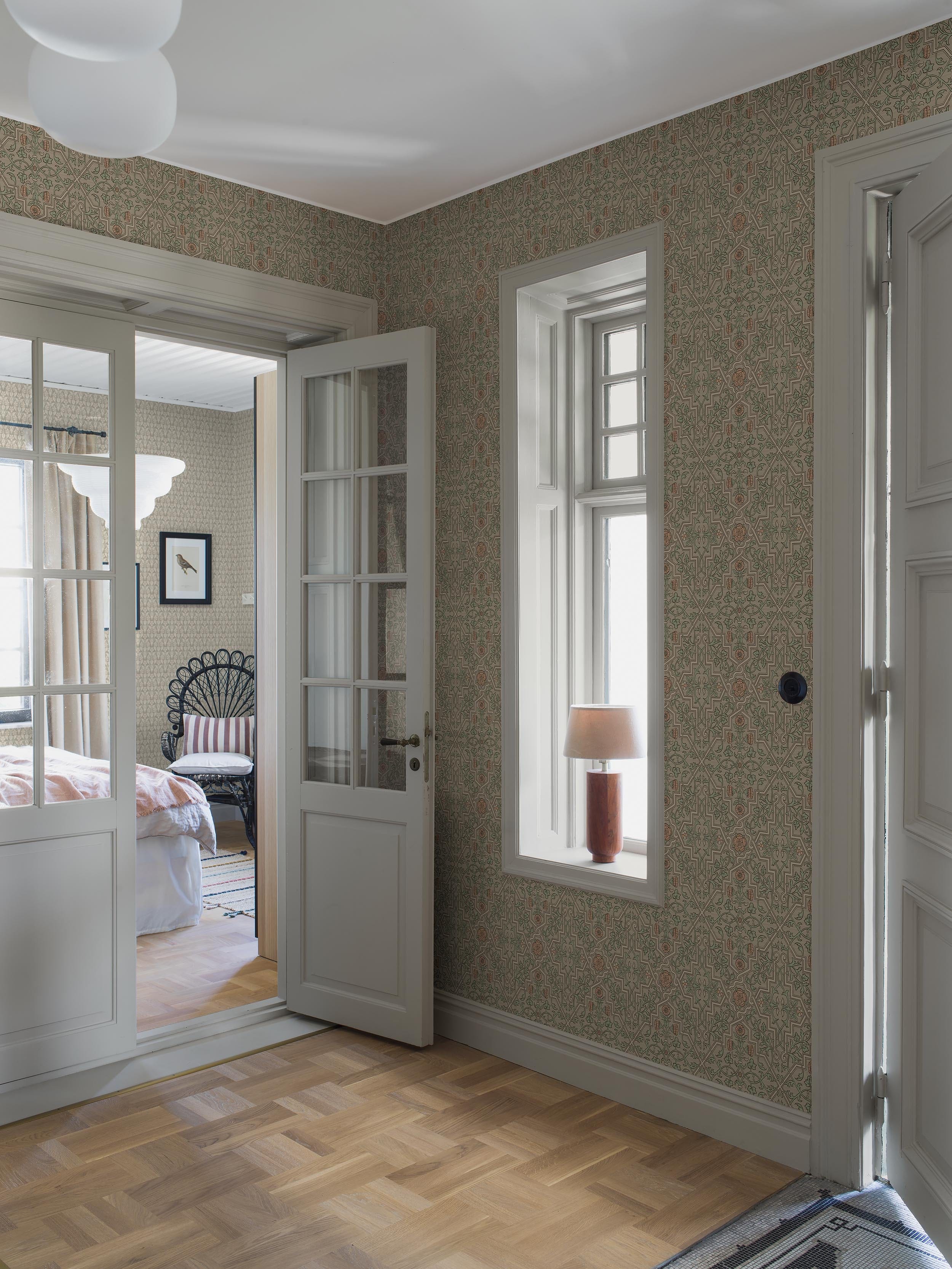
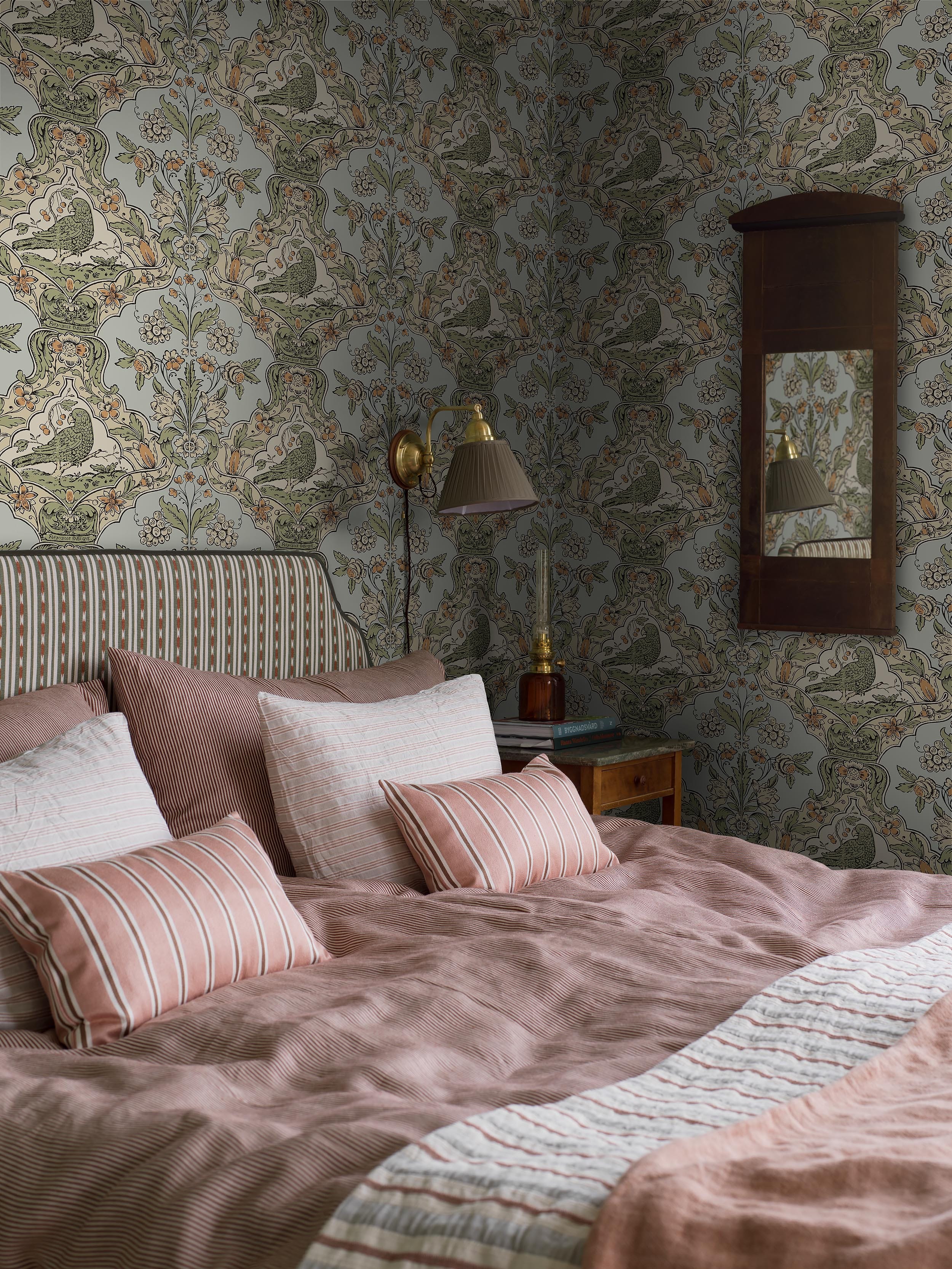
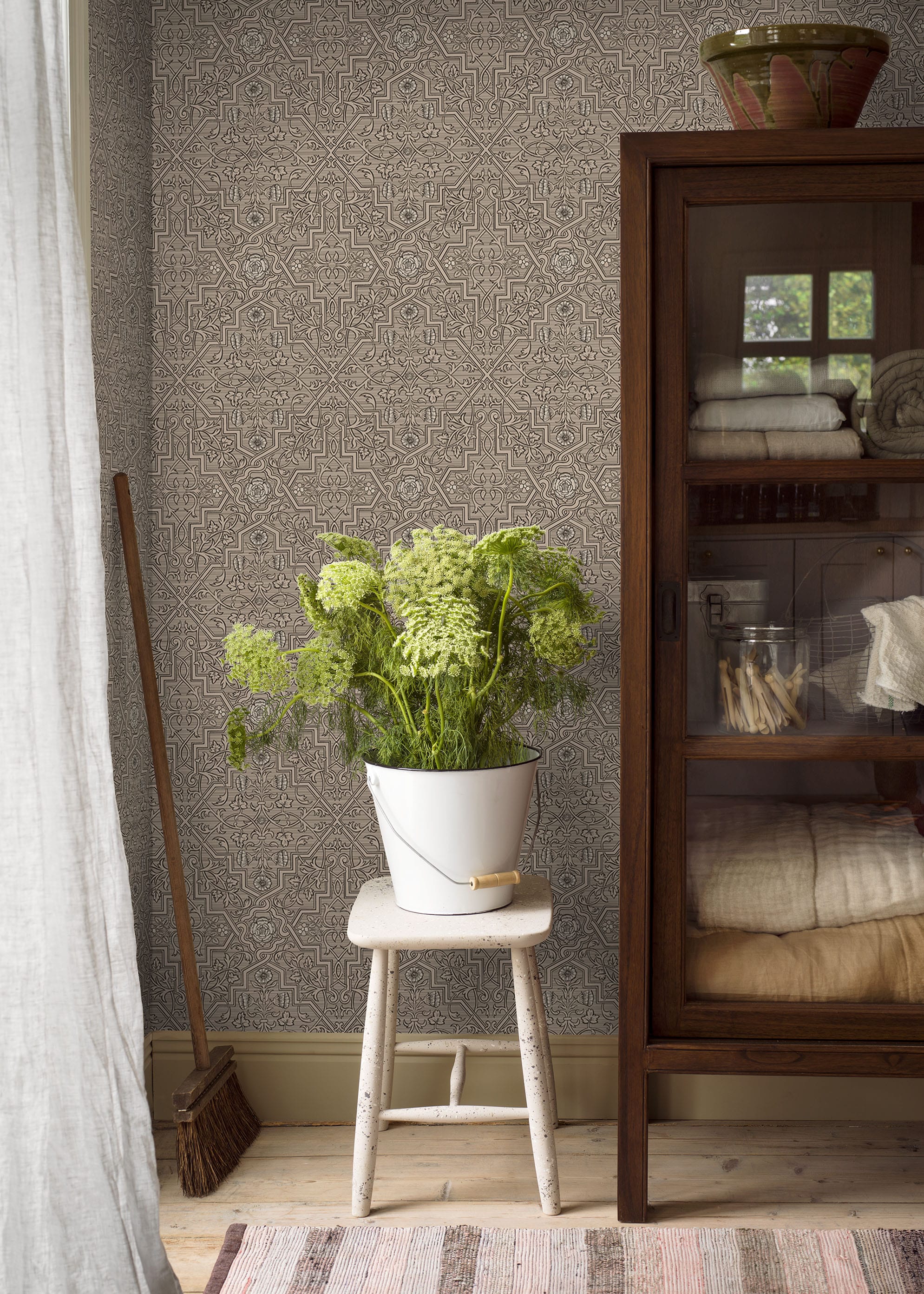
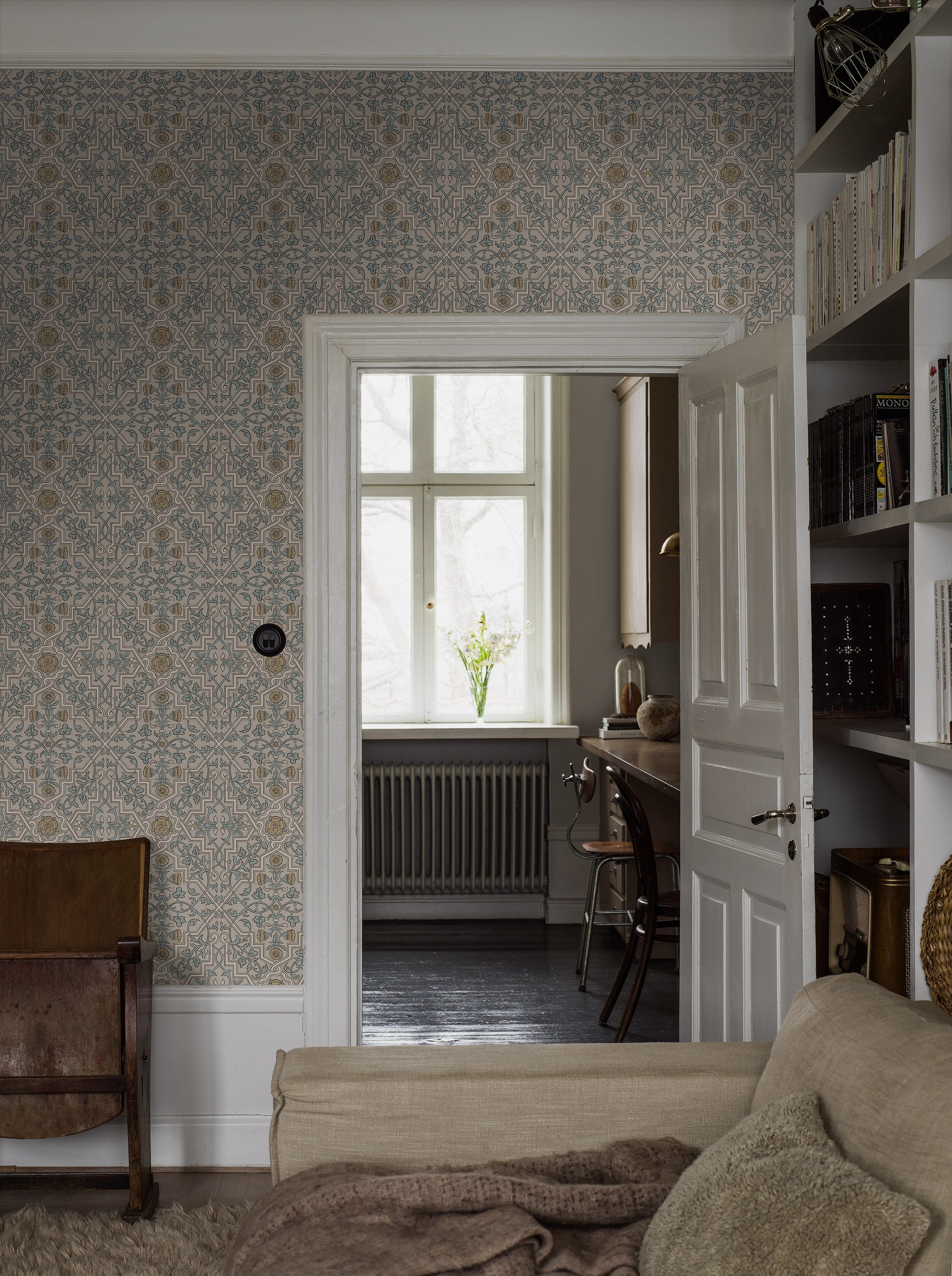
In Sweden, some woven wallpaper already existed in the early 16th century. The oldest preserved Swedish paper wallpaper is from the 1570s and was found on the ceiling beams in the Rosenvingska house in Malmö in the 1950s. That very wallpaper from the 16th century is now available in a new print with us at Boråstapeter; Rosenvinge – a fantastic piece of cultural history!
Baroque wallpaper from the 17th and 18th centuries
During the Baroque, the style was pompous and grand, it was about impressing and commanding respect. Baroque forms are therefore often grand, almost bloated, and homes were decorated with gilded leather, imitation painted precious wood, spiral-twisted columns and oval medallions. The acanthus loop also appeared frequently on baroque tapestries from this period.
Rococo wallpaper from the early 18th century
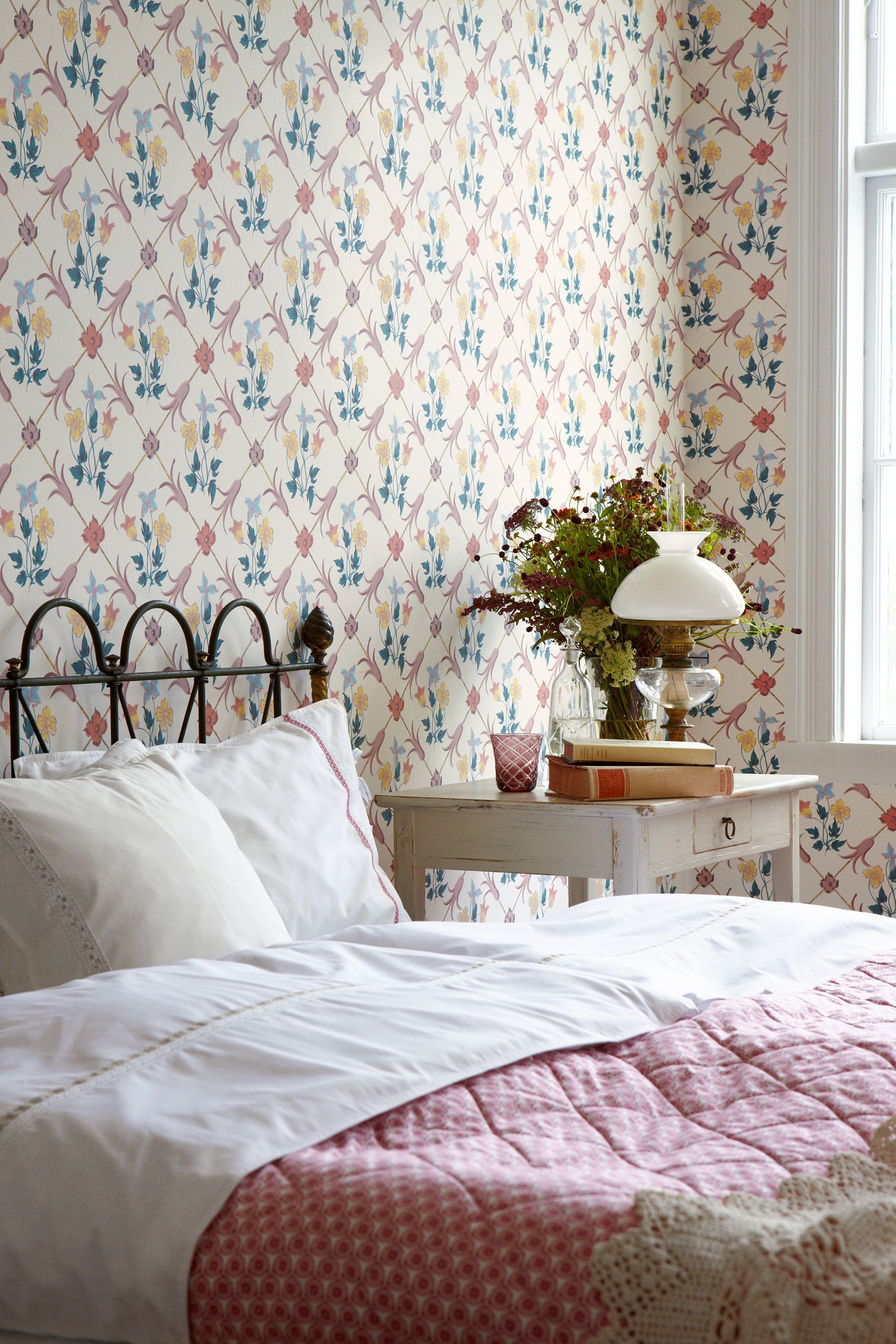
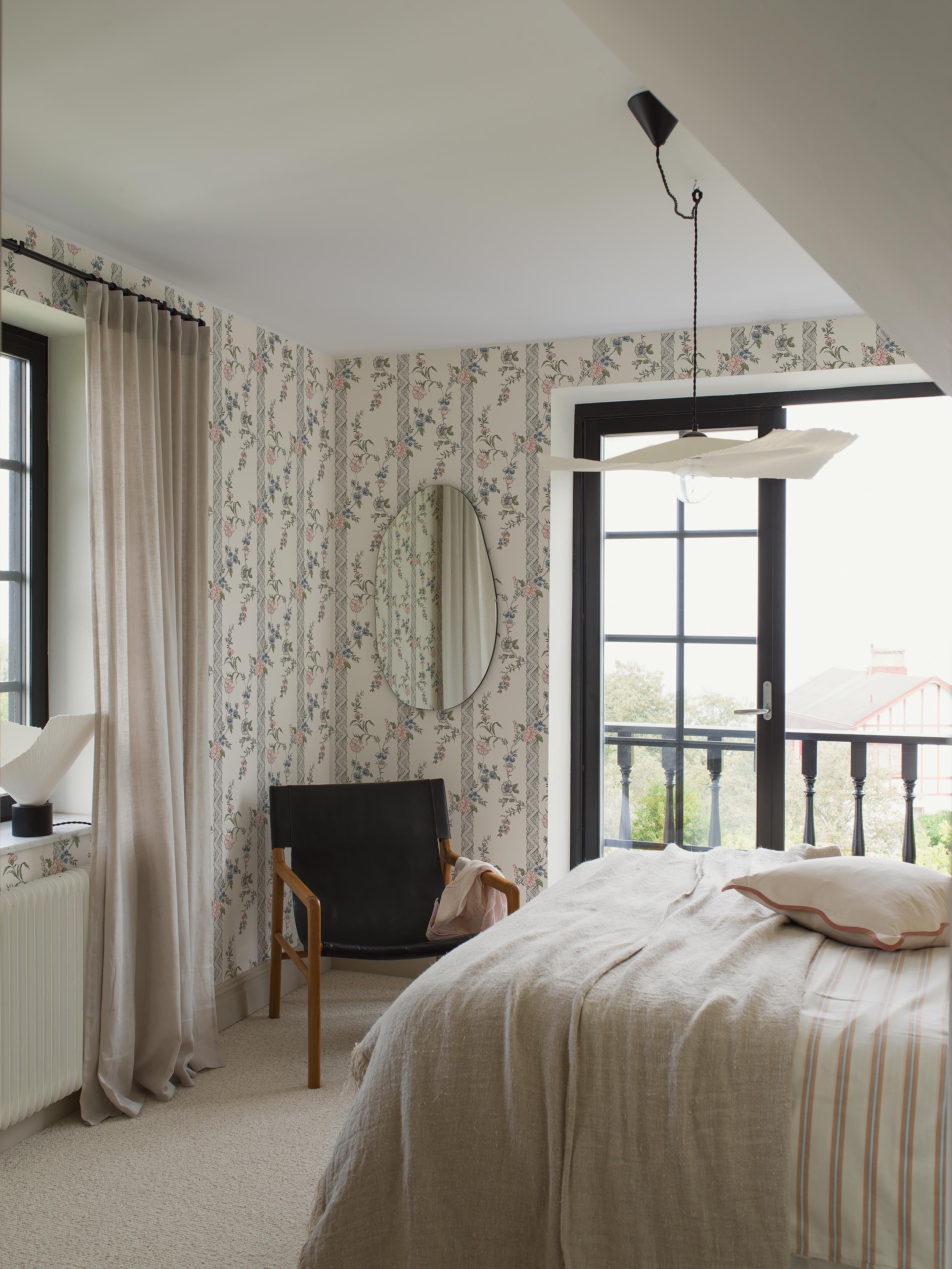
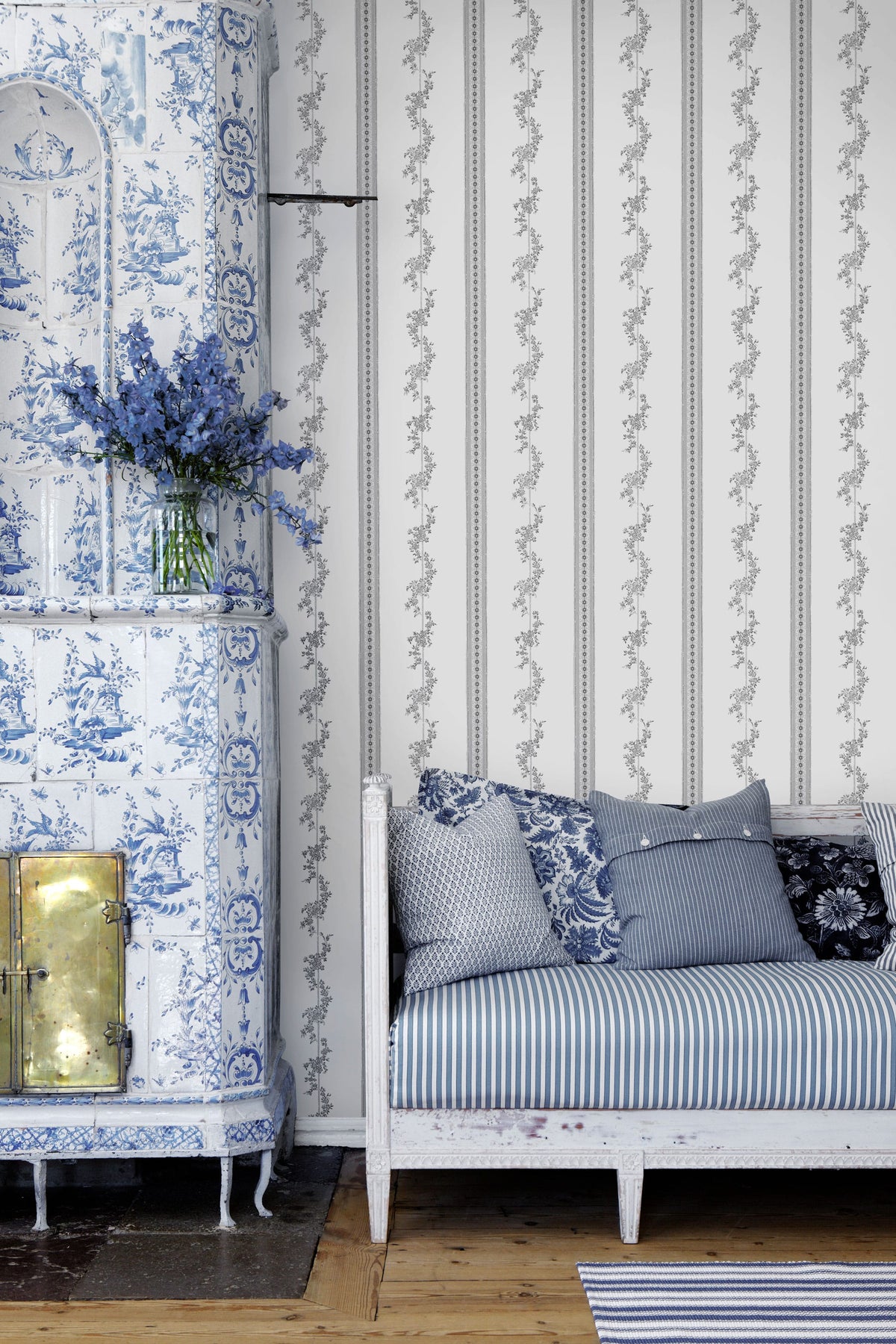
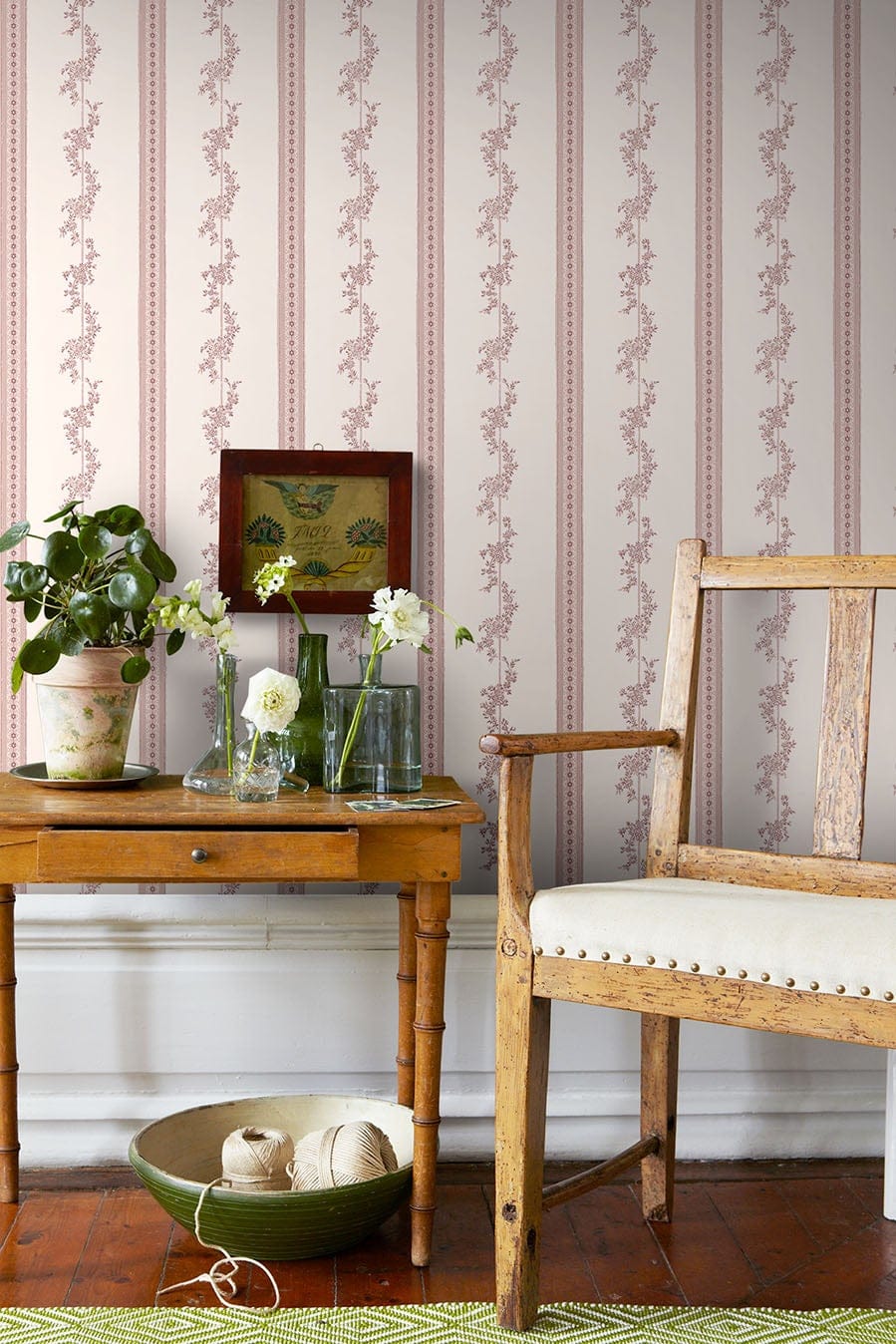
A bit into the 18th century, the Baroque had to give in to the style ideals of the Rococo, with elegant, theatrical and preferably asymmetrical designs. Typical of the Baroque are S- or C-shapes made up of corals, shells or winding bands (rocailles). Striped rococo wallpaper with decorated floral scrolls was also common, as were diagonal check patterns with ornate ornaments at the intersections. Thanks to the East India Company, they also drew a lot of inspiration from the Orient. Maybe you've heard of the style Chinoiserie from this period? Motifs to look for if you want to decorate with 18th-century rococo-style wallpaper are, for example, ornate shells, roses, birds and fruits.
Gustavian wallpaper from the late 18th century
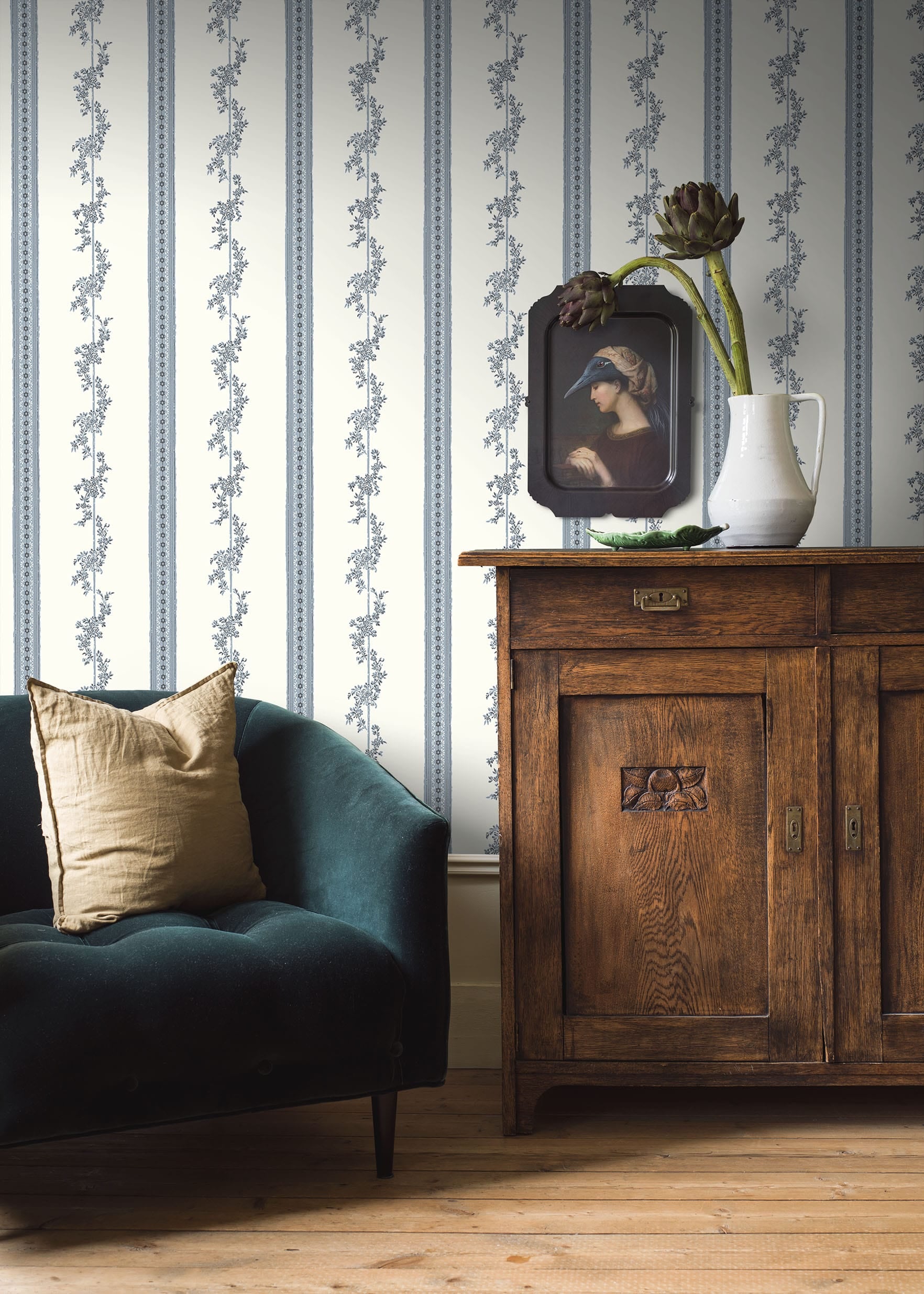
During the second half of the 18th century, Neoclassicism and Gustavian wallpaper dominated instead, with elegant stripes, columns, rosettes and leaf loops (festoons) in light pastels. The furniture was often tasteful, and often decorated with medallions or some small flower (fleuron). The Gustavian style was much more restrained than the frivolous Rococo; brighter, calmer and more orderly, preferably with symmetrical pattern images.
Almoga wallpaper
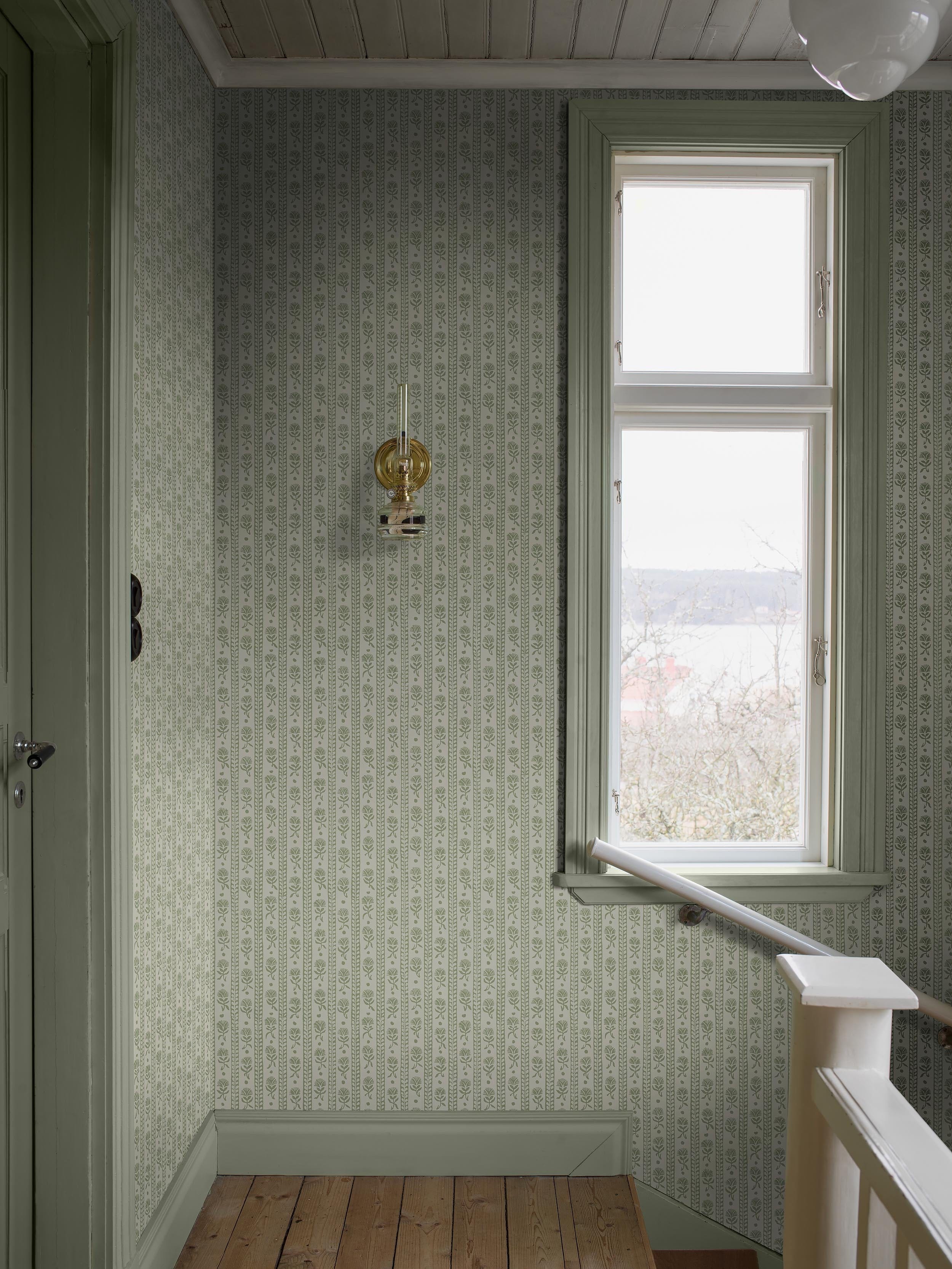
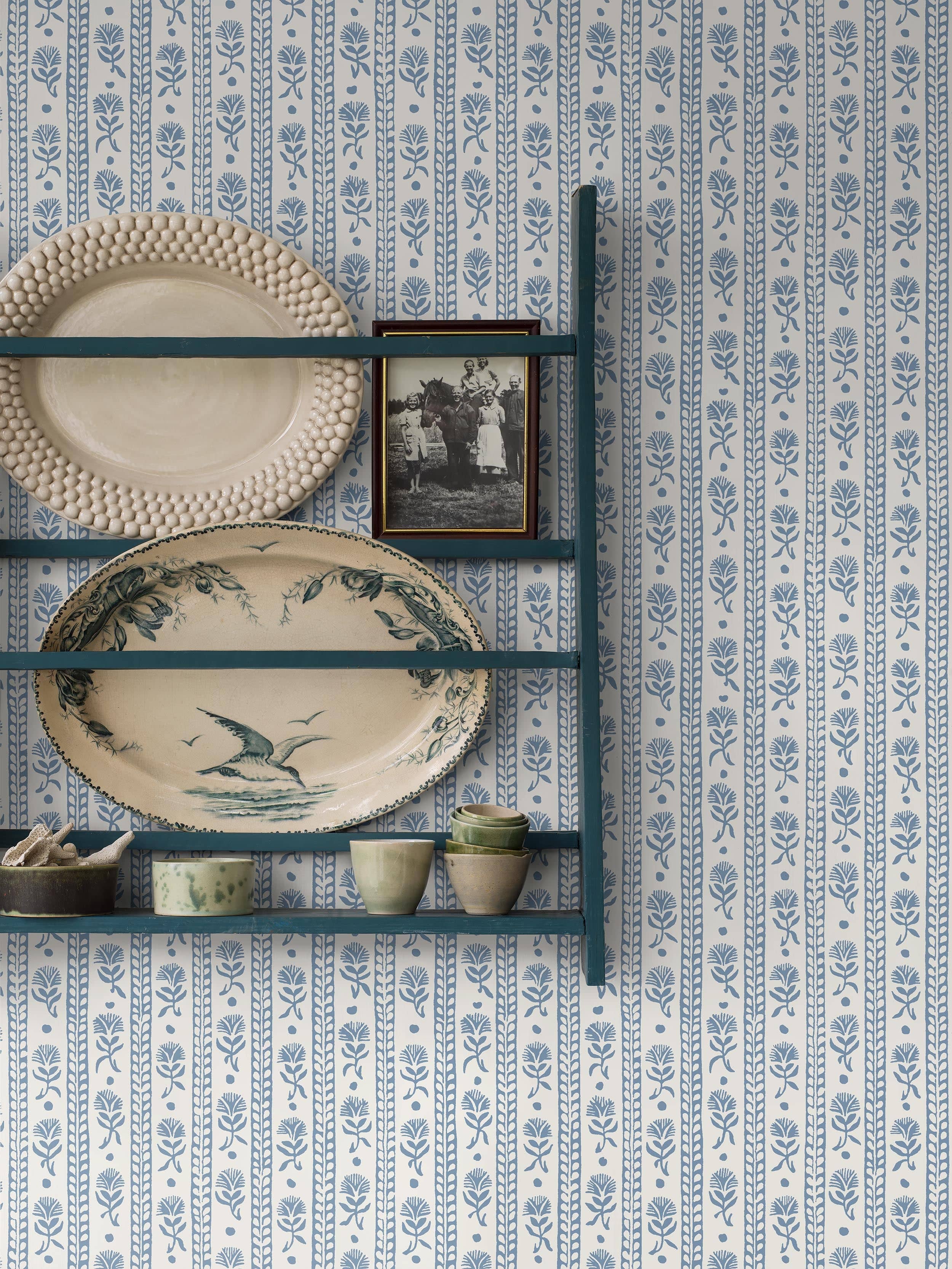
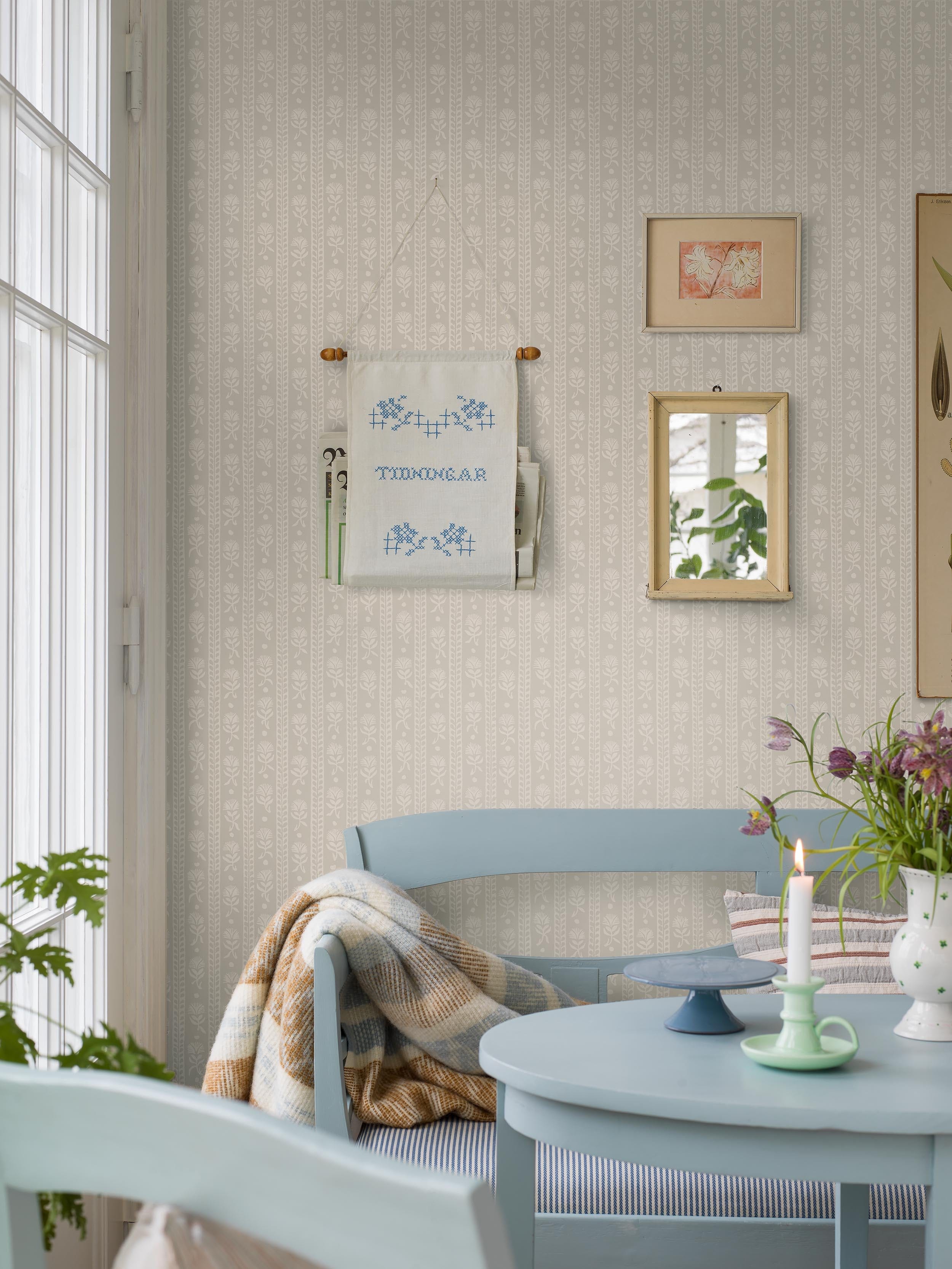
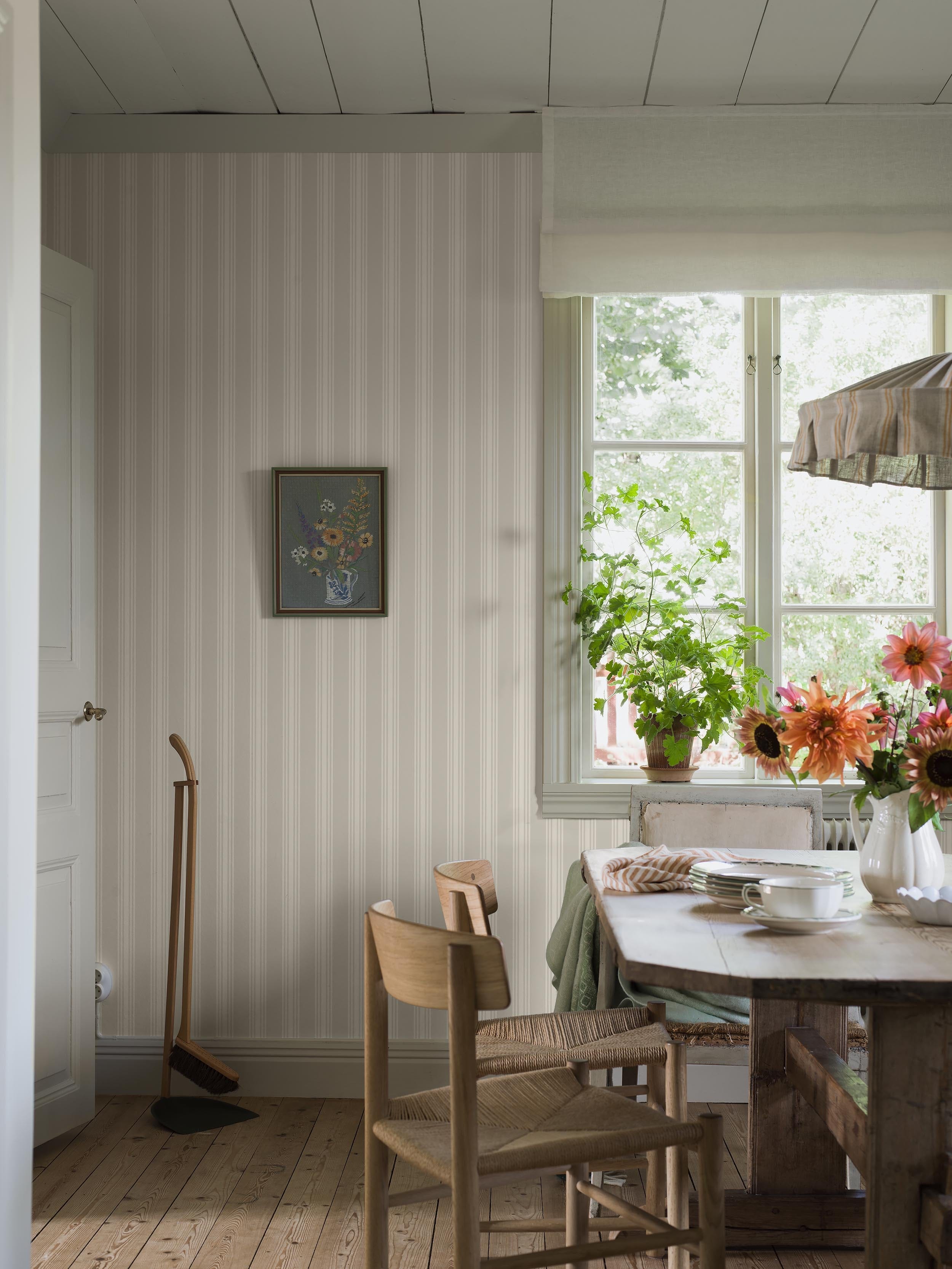
In simpler and more rural homes, the decorations were often in the old Swedish style. We often talk about common folk, i.e. furniture, fabrics and other everyday objects decorated with hand-painted, woven or embroidered patterns in red, green and blue. The home was supposed to be practical, but the beautiful also had its place. The walls were timbered or paneled, either all the way to the ceiling or as a chest panel with wallpaper above. The walls were often painted with stencil or splash paint in the typical color scale: red, green and blue. Low-class wallpaper with stencil printing or splash-painted wallpaper can therefore be a good alternative for those who want to decorate in a low-class style.