We receive many questions about wallpapering, what our products are made of, and how to go about hanging your wallpaper. Here we have gathered our most frequently asked questions and answers to help you achieve the best results with your wallpapering.
How do you calculate the number of rolls needed?
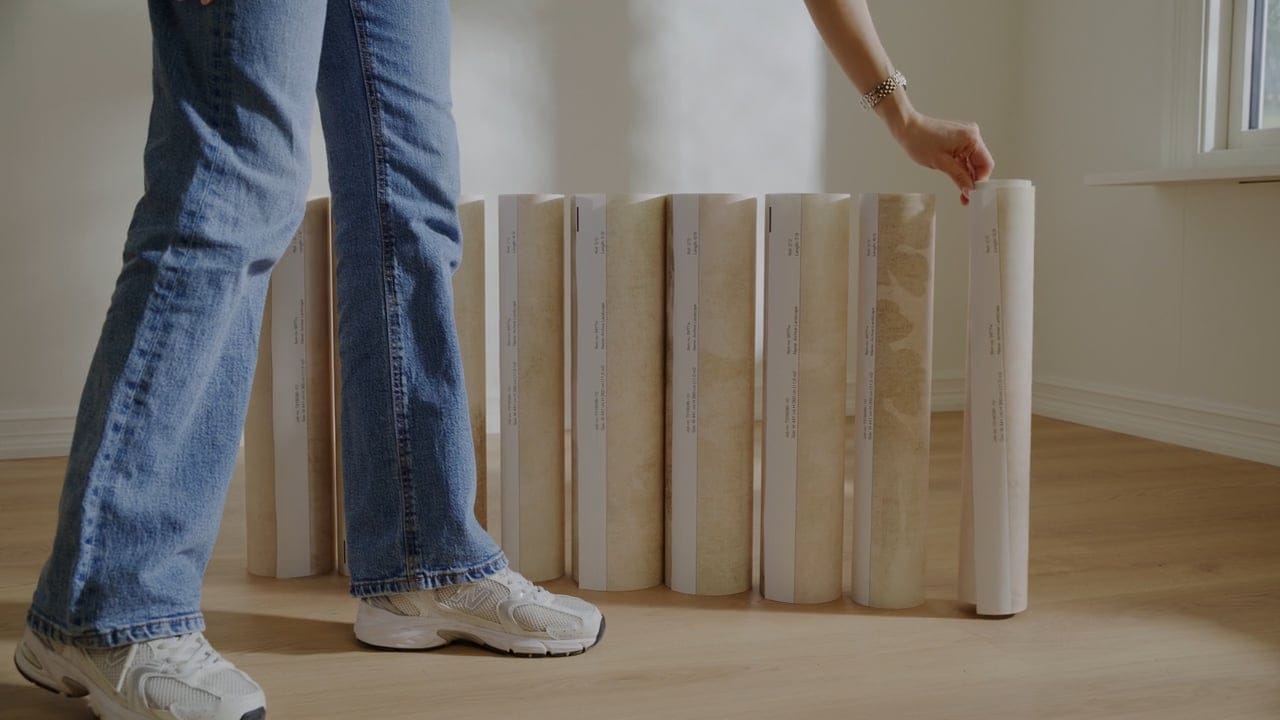
You need to know the length and width of your walls, which you enter via the “Calculate number of rolls” link on the product page. The link is located just below “Add to cart”. You can also visit our wallpaper calculator to work out how many rolls you need.
Do you need to paint before wallpapering?
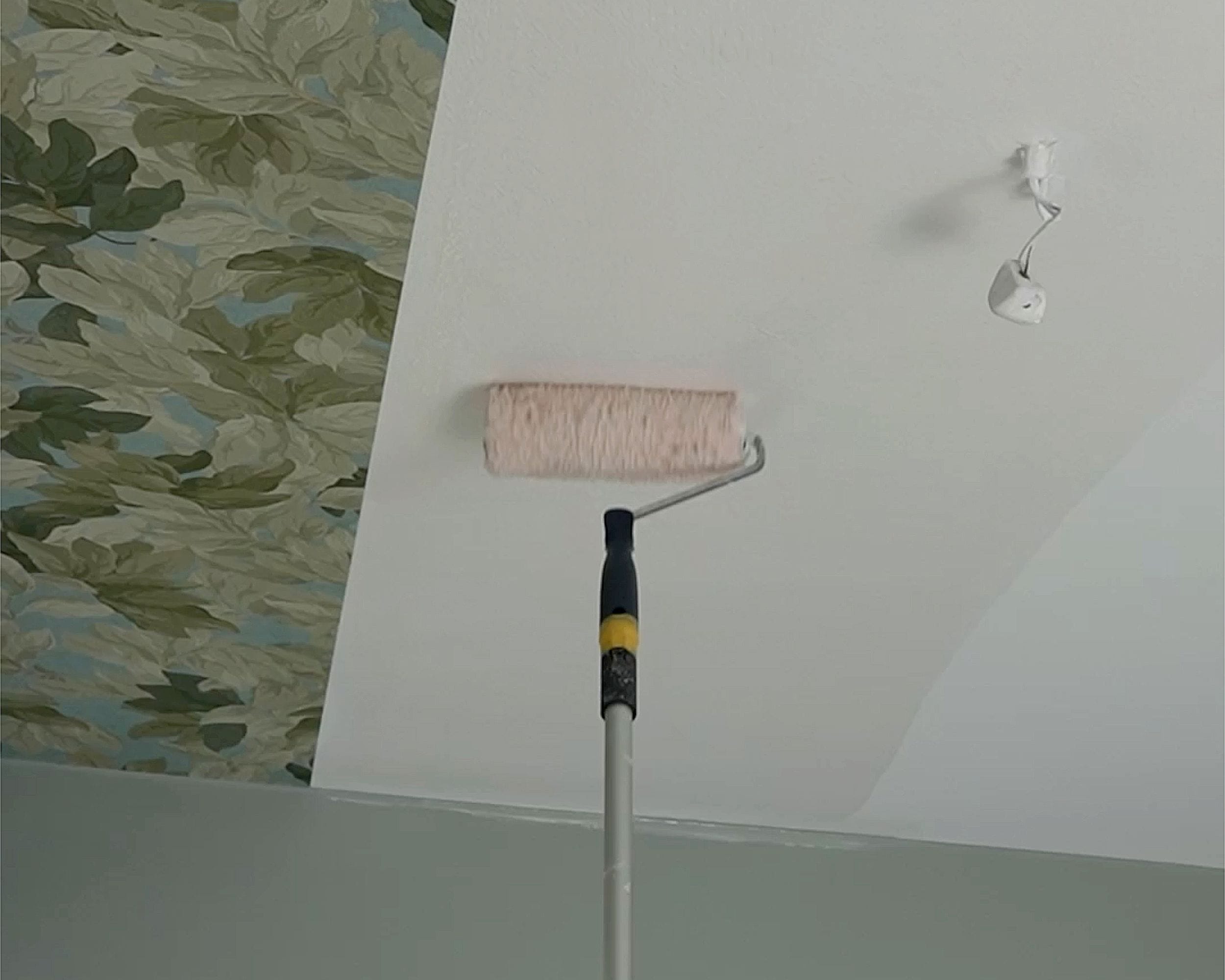
All our wallpapers marked EasyUp do not require painting beforehand. You can find the label on the product page on the website and on the wallpaper roll label. You can read more about EasyUp under the question “What does EasyUp mean?” further down this page.
Can you hang a light wallpaper over a dark one?
All our wallpapers marked EasyUp have a high enough opacity to cover a dark patterned wallpaper without it showing through. You can find the label on the product page on the website and on the wallpaper roll label. You can read more about EasyUp under the question “What does EasyUp mean?” further down this page.
What surfaces can you wallpaper on?
The basic rule is that the surface should always be dry, smooth, and firmly secured.
Can I wallpaper in a bathroom?
Our wallpapers are not classified for use in wet rooms according to current building standards, but it is of course fine to wallpaper a room with a toilet and sink, where the humidity is considerably lower than in a bathroom equipped with a shower or bathtub.
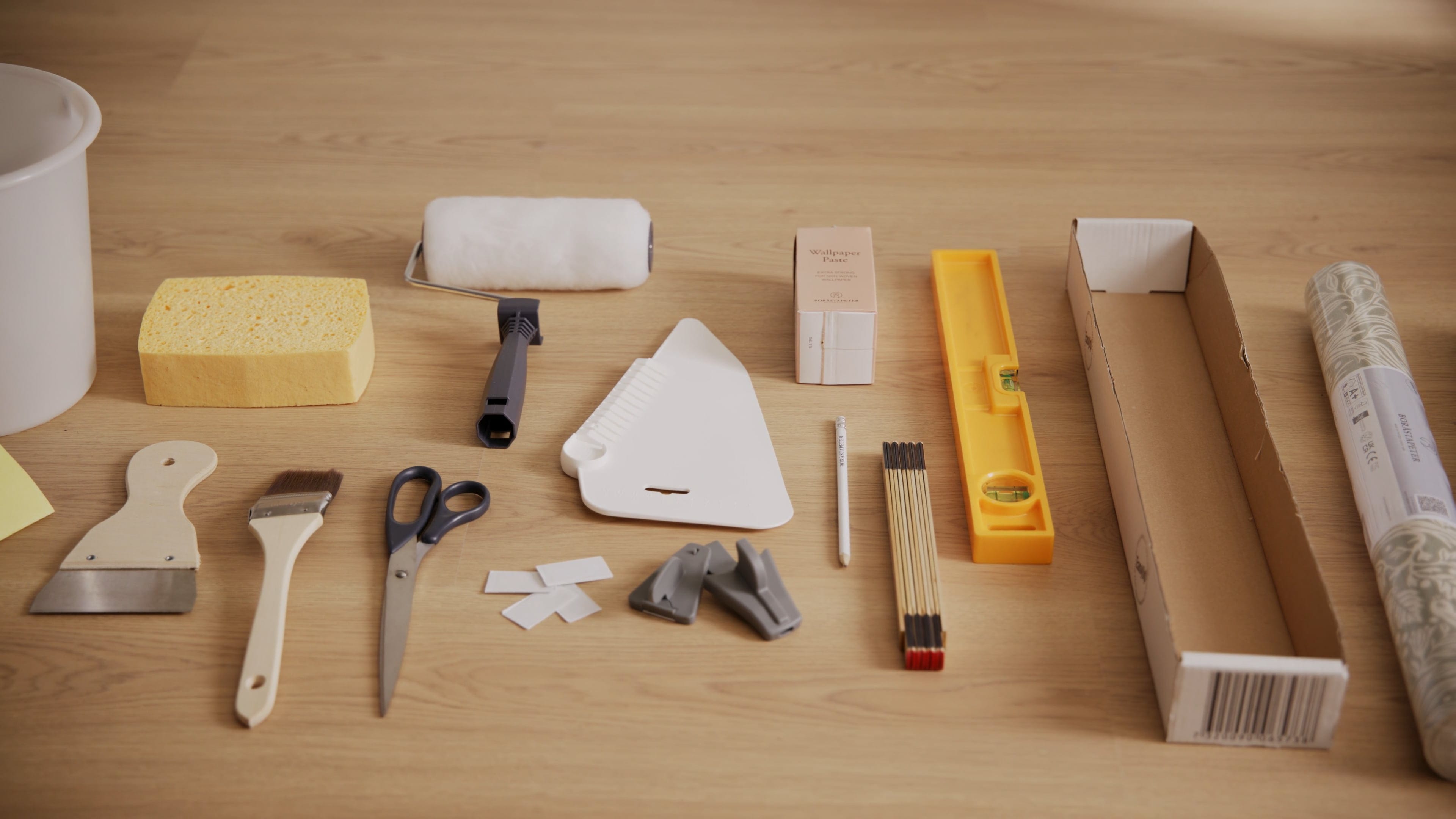
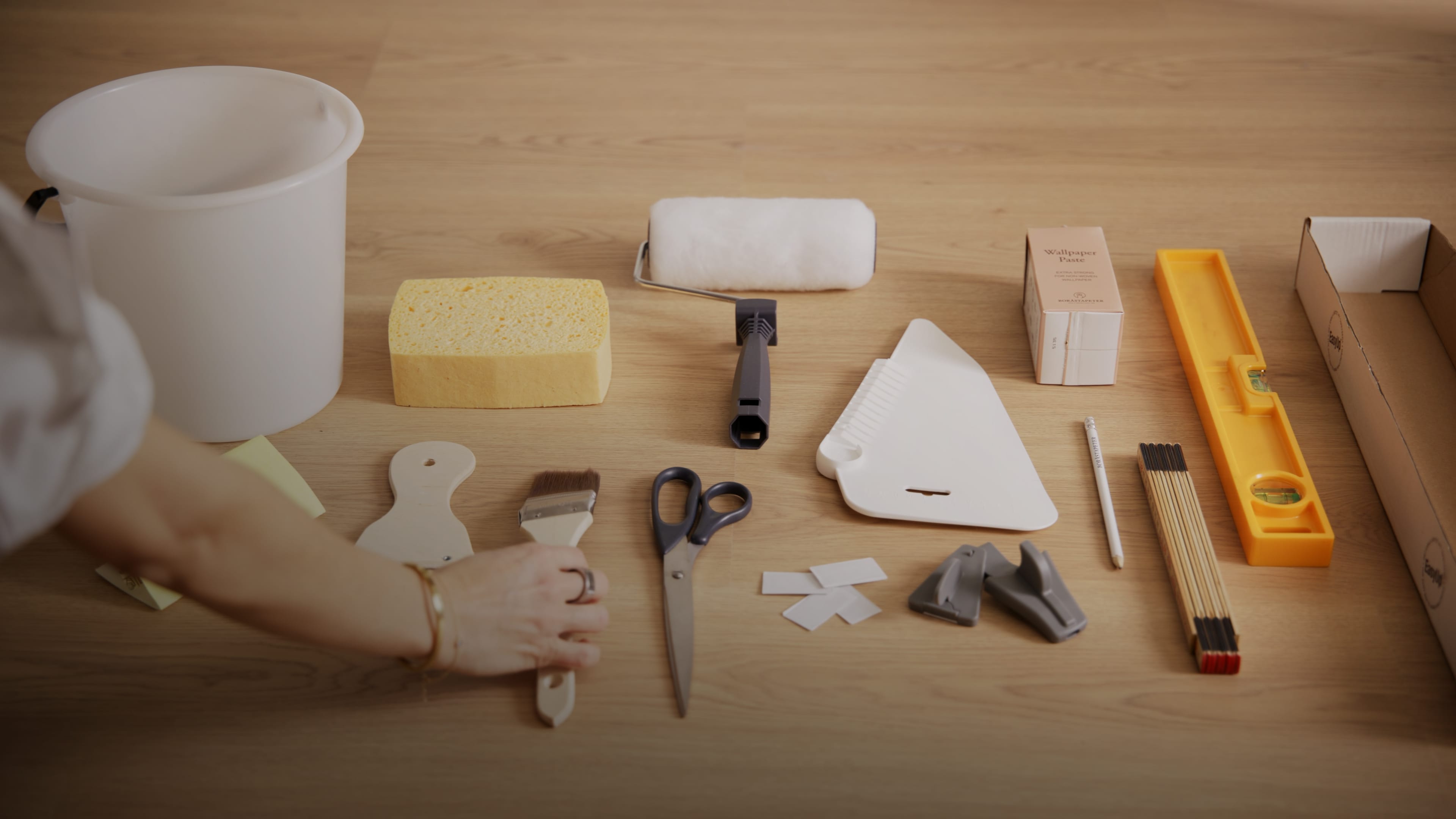
What tools do I need when wallpapering?
You will need:
• Washing sponge
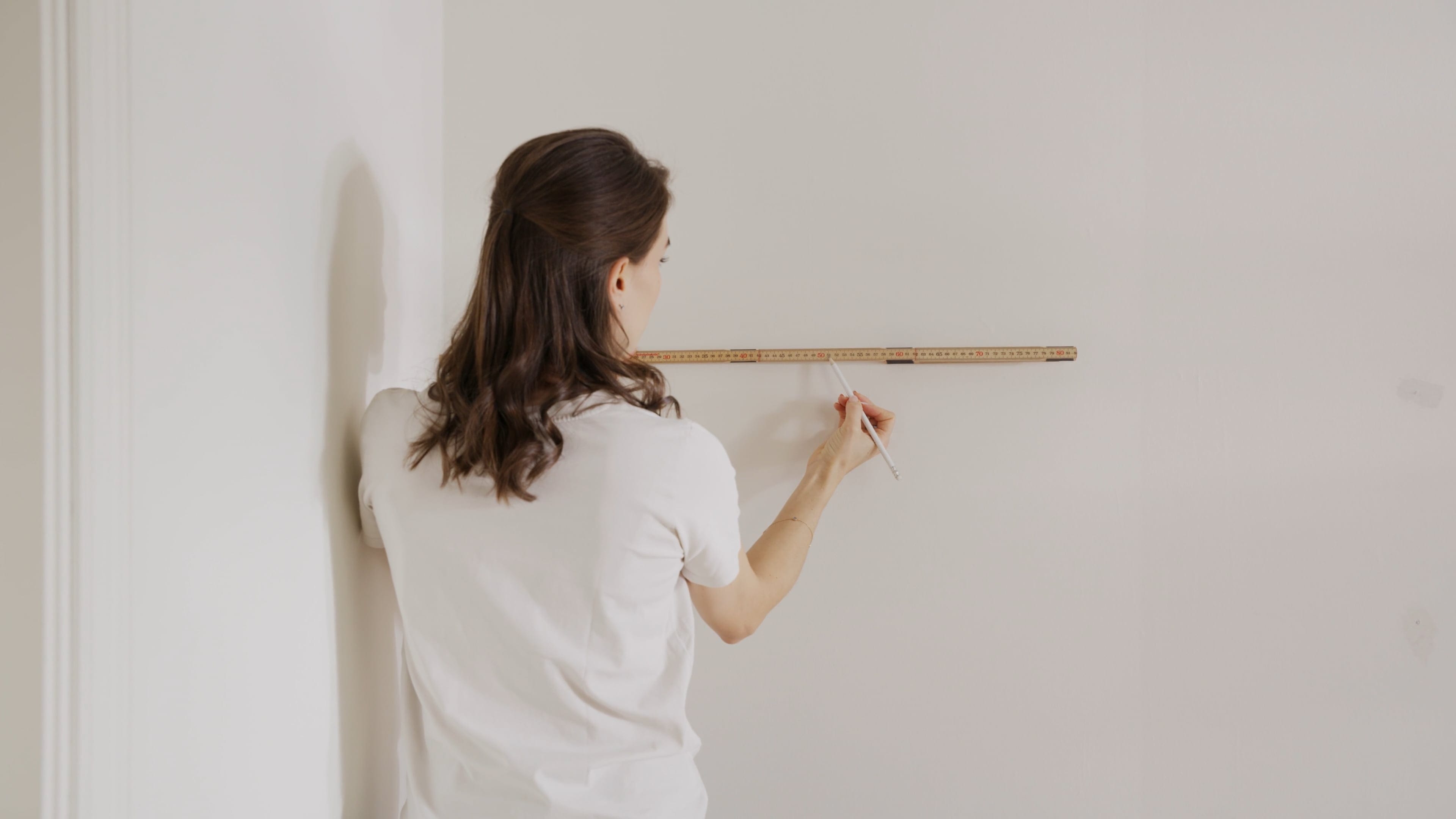
• Spirit level or plumb line
• Brush
• Wallpapering tool
• Scissors
• Folding rule
• Roller
• Wallpaper knife
• Extra blades for the wallpaper knife. Tip! Change blades often.
How do you remove old wallpaper seams?
If you mean overlapping seams, they can be sanded down with sandpaper or trimmed down with a special small planer designed for the purpose. Sometimes these overlapping seams may be a little looser, and then you can use a knife to cut/tear them away. Then fill and sand the surface smooth before wallpapering again.
How do you match the pattern?
Depending on whether the pattern has a straight match or an offset match, there are different ways to align the pattern. See our guide on pattern matching here.
Where should you start wallpapering?
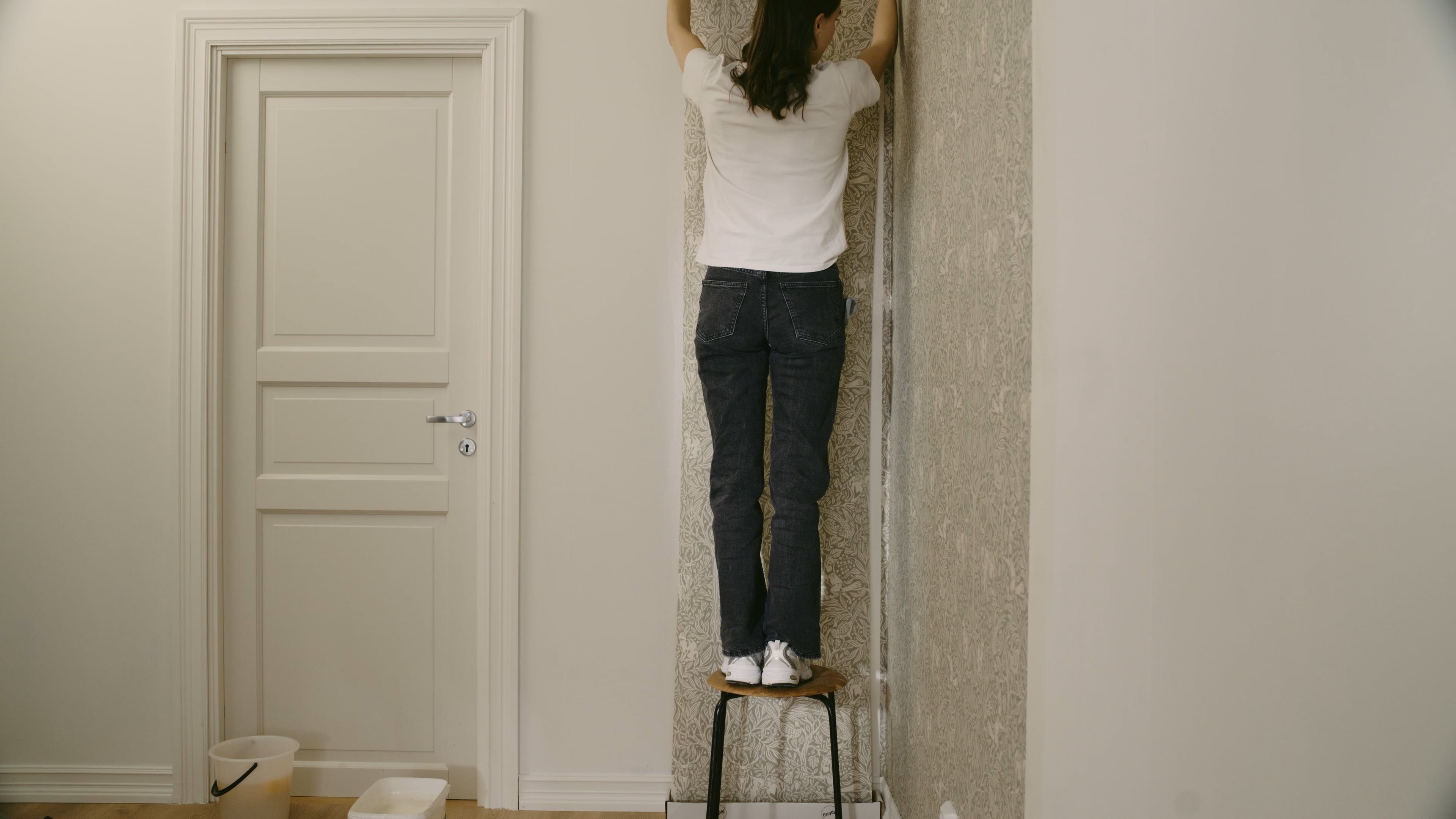
Start from the most eye-catching corner of the room. From there, wallpaper first in one direction, then in the other. That way, any small mistakes in, for example, pattern matching will not be noticeable.
How do you wallpaper around wall sockets?
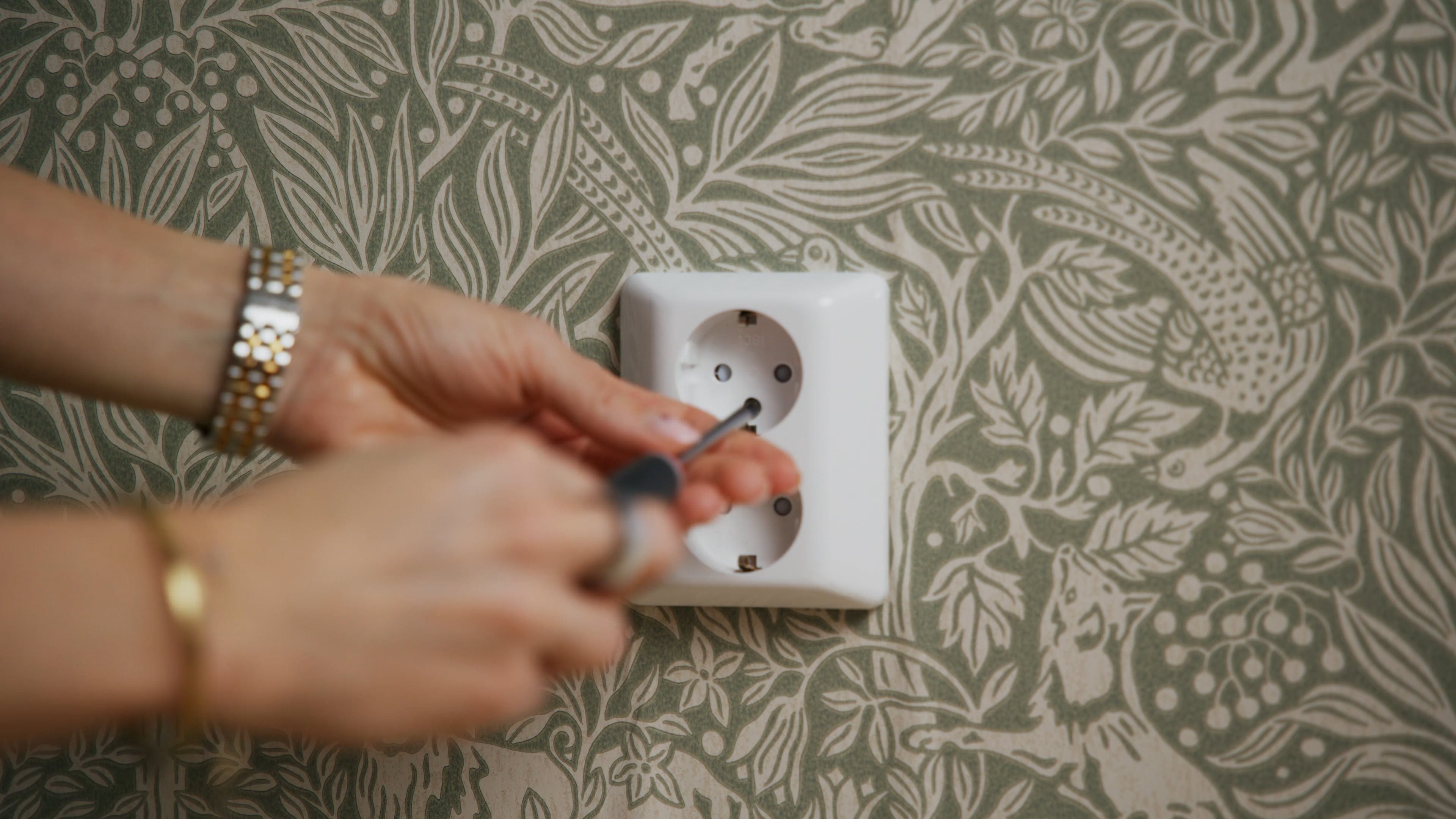
1. Turn off the electricity and remove the socket cover/switch.
2. Hang the wallpaper straight over it and then cut a small hole over the wires where the socket would otherwise sit.
3. Then reattach the socket cover/switch.
See our guide on how to wallpaper around wall sockets here.
How do I wallpaper corners?
See our simple step-by-step guides on how to wallpaper corners:
Wallpaper internal corners
Wallpaper external corners
How do I get rid of bubbles in the wallpaper?
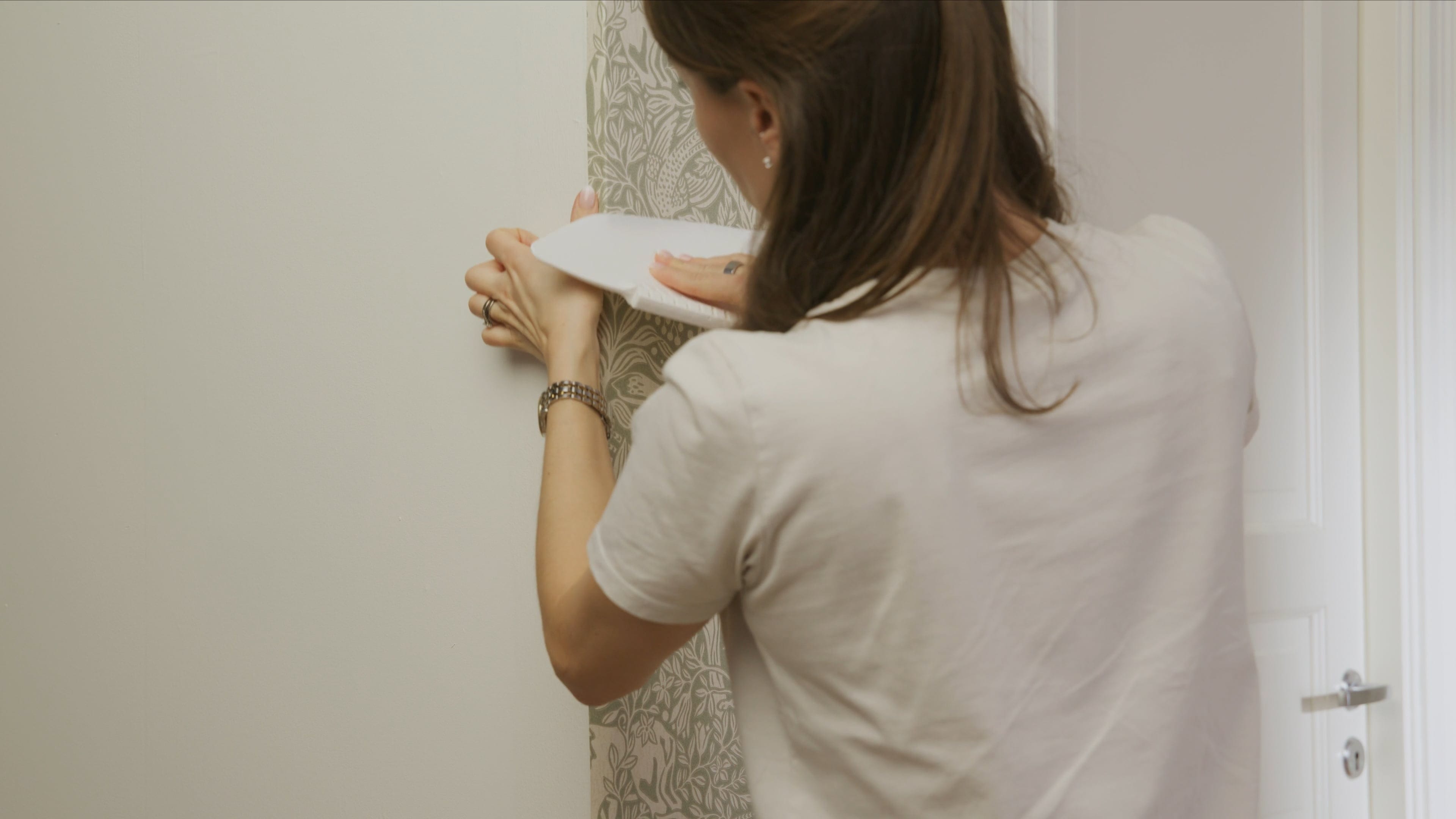
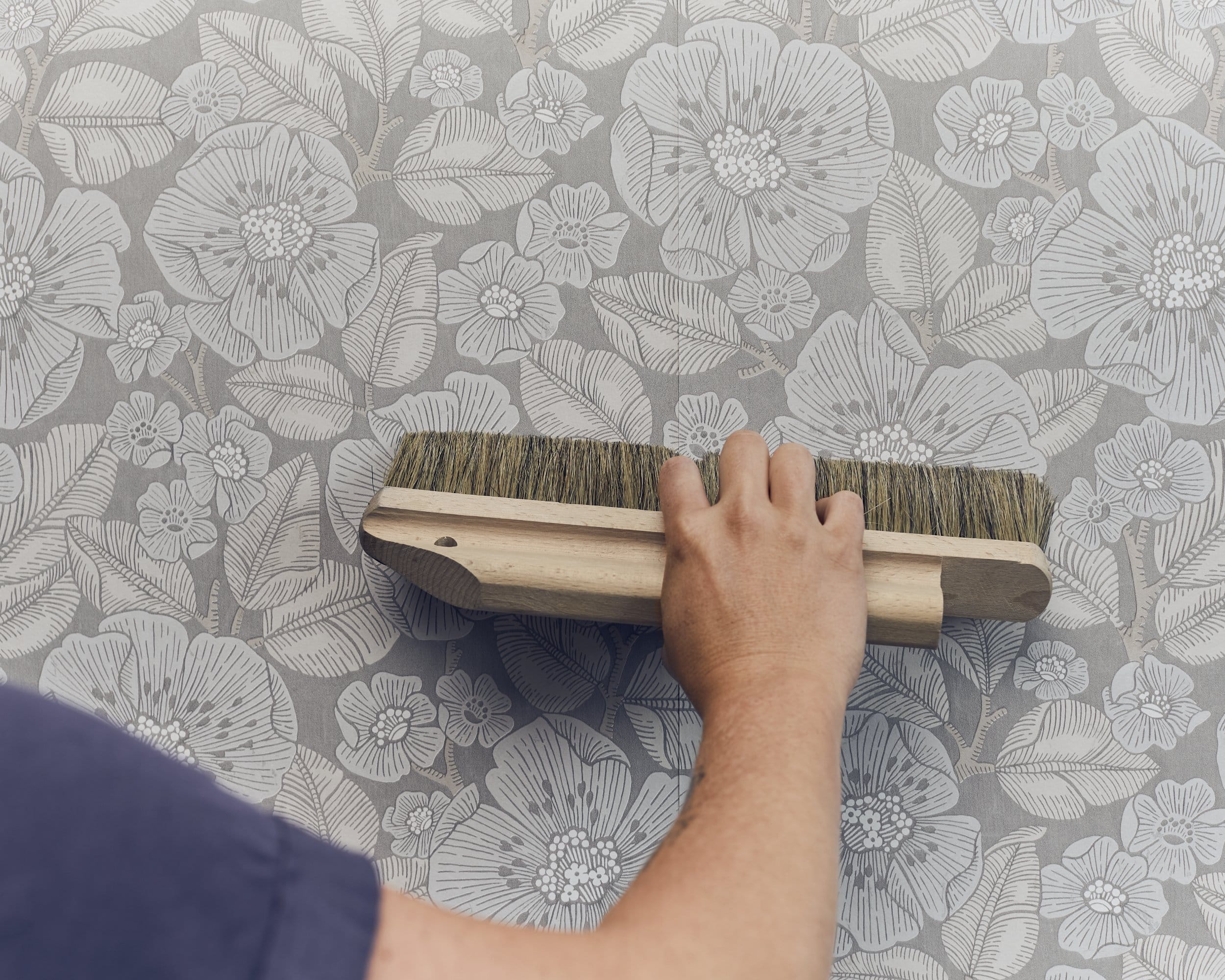
Be sure to remove all air bubbles under the wallpaper using the wallpapering tool. A wallpaper brush is often too soft, so use the recommended wallpapering tool instead.
Bubbles that cannot be removed may be due to missing adhesive or using too little adhesive. It may also be old bubbles in the previous wallpaper layer of older paper wallpaper that swell up. These often flatten out once the adhesive has dried, but if they are larger than the size of a hand, they should be dealt with by sanding and filling before continuing the work.
If you have misjudged and find isolated bubbles after the wallpaper has dried, these can be fixed as follows:
Cut a slit through the entire bubble with a sharp razor blade. Try to lift it and get adhesive into the bubble. Press it down and allow the adhesive to dry.
What does EasyUp wallpaper mean?
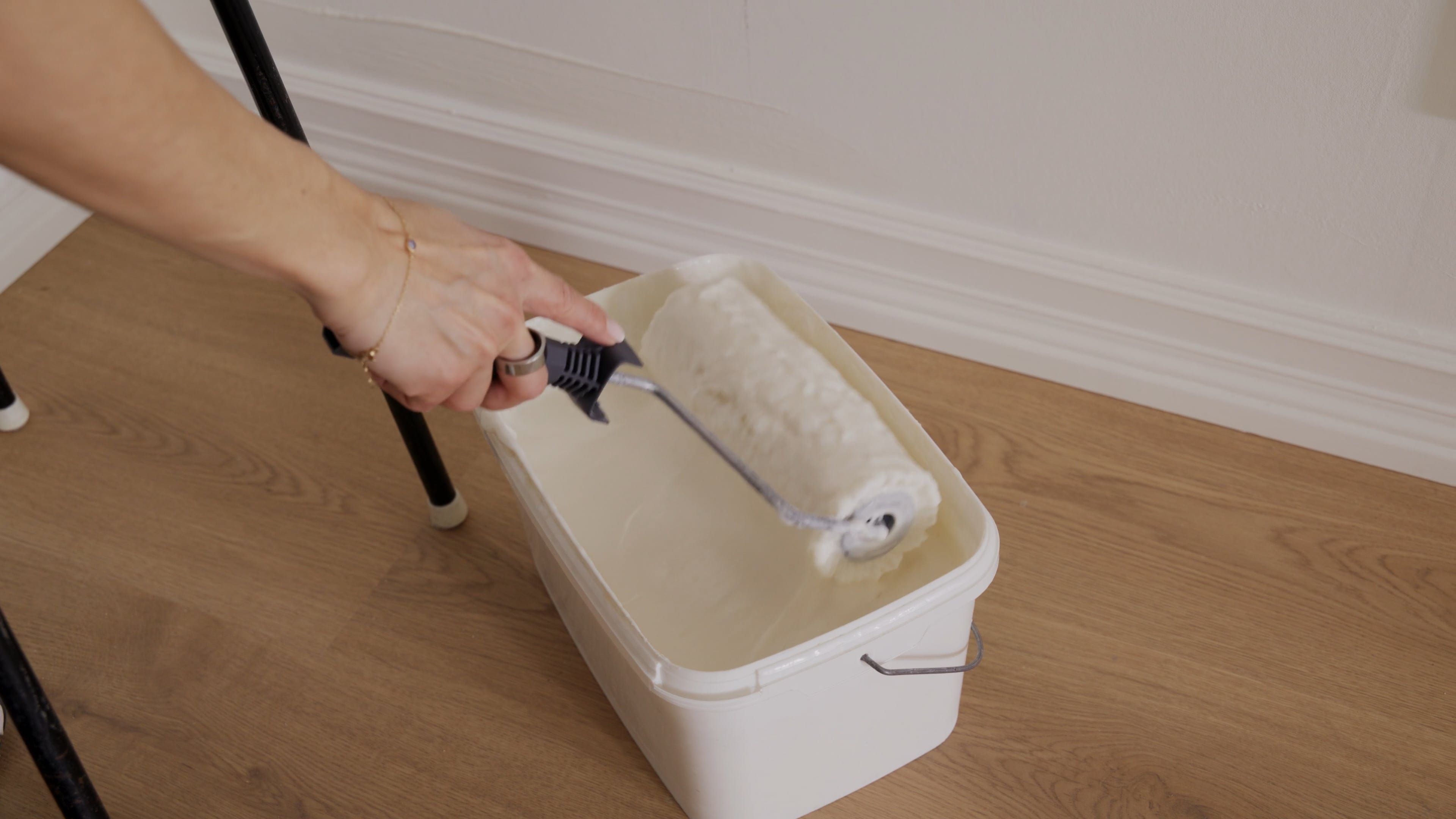
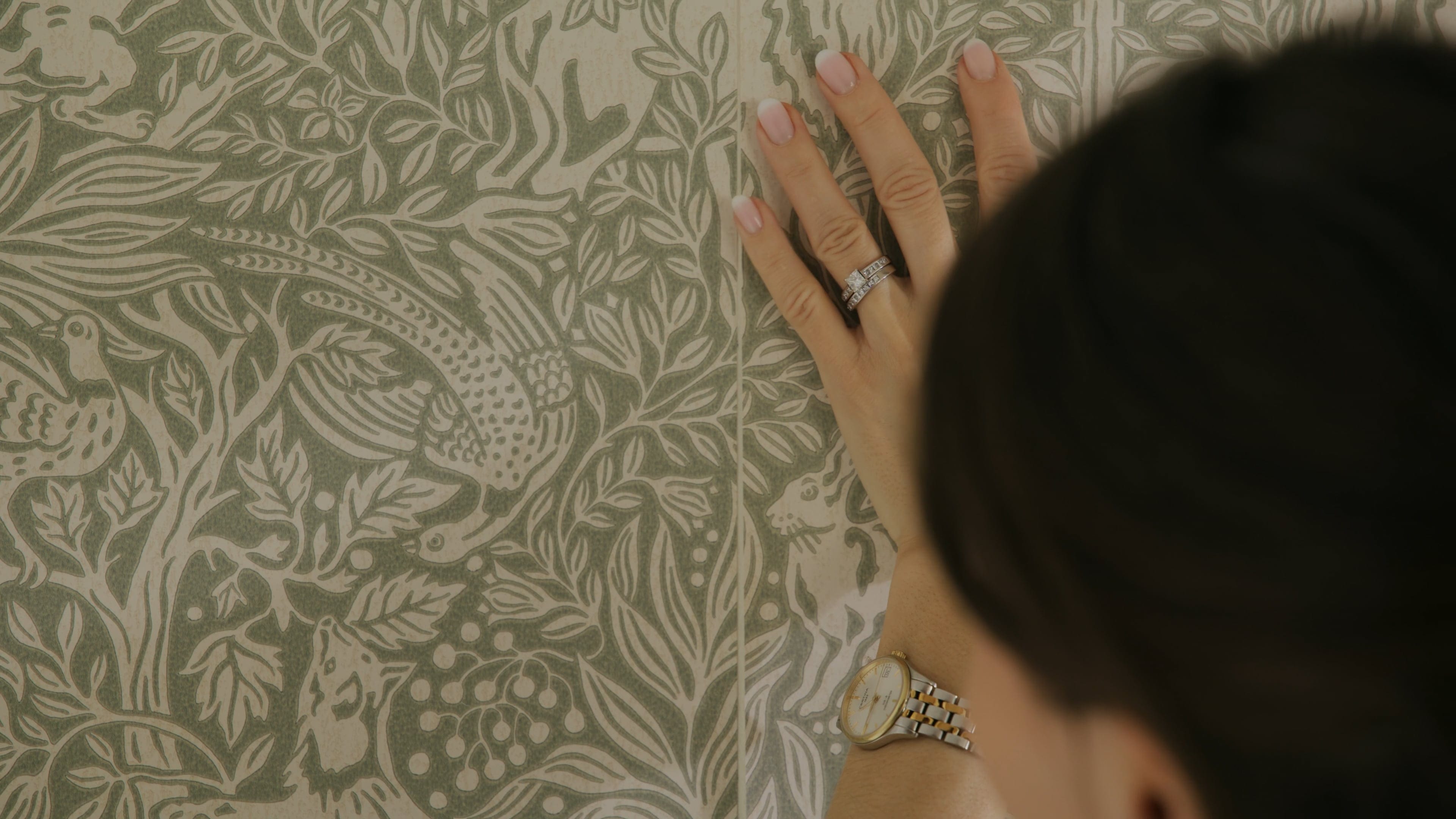
EasyUp wallpaper is a non-woven wallpaper, which means you apply adhesive directly to the wall and then hang the wallpaper. This gives you neat seams because the wallpaper is hung edge to edge instead of with an overlap. EasyUp also means the wallpaper has high enough opacity to cover an old wallpaper underneath without the pattern or colour showing through.
What is a non-woven wallpaper?
Non-woven is a wallpaper made of paper with polyester fibres added, which makes it wet-strong and prevents it from swelling. This means you can apply adhesive directly to the wall and hang the wallpaper edge to edge straight away.
What is the difference between paper wallpaper and EasyUp wallpaper?
The difference is that polyester fibres have been added to the paper pulp in the EasyUp material, which means you can apply adhesive directly to the wall and then hang the EasyUp wallpaper. EasyUp wallpaper is also more wet-strong and does not swell on the wall, which means you can hang it edge to edge to avoid overlapping seams. Paper wallpaper, on the other hand, is made from paper pulp without polyester fibres.
Which collections are paper wallpaper and which are EasyUp?
The majority of our wallpapers are EasyUp. It is always stated on the roll label and in the wallpaper book whether the wallpaper you have chosen is EasyUp quality or not. However, the Borosan Paper collection is a paper wallpaper.
How do you wallpaper with EasyUp Recover?
If possible, we recommend testing on a smaller area first to see the result on the surface you want to cover. For Recover to adhere to the surface, it must be dry and clean. Painted surfaces should be cleaned with sugar soap or similar. Highly absorbent surfaces may require pre-pasting.
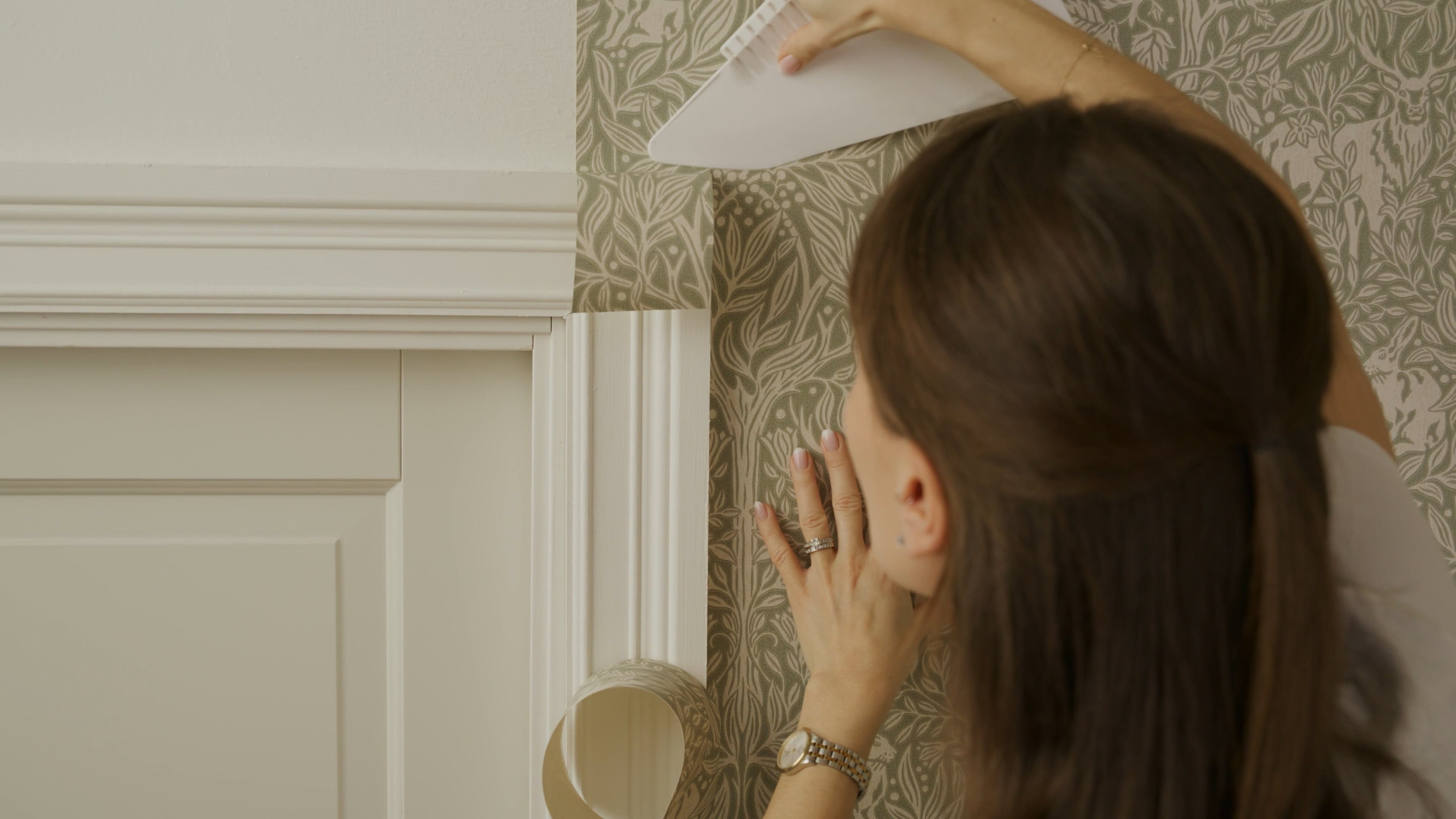
Apply adhesive generously, according to the recommendation on the product label, in an even layer on the surface for 2–3 lengths at a time. Let the adhesive dry for about 15 minutes for the best tack. Hang the lengths edge to edge and carefully press out all air using a suitable wallpapering tool. Trim excess material with a sharp tool. Allow to dry completely (12–24 hours) before wallpapering or painting the surface.
Can I clean my wallpaper?
Our wallpapers have extra washability, which means you can easily remove most dirt stains.
Do this:
• Moisten the stain with a cloth or sponge (use a soap solution or a little mild washing-up liquid).
• Wipe with plenty of lukewarm water so that all soap residue is removed.
• Wipe away excess water and let the wallpaper air dry.
Try to avoid getting liquid into the seams where the wallpaper is unprotected.
How do I recycle leftover wallpaper?
You recycle wallpaper as combustible waste.
Our guides